

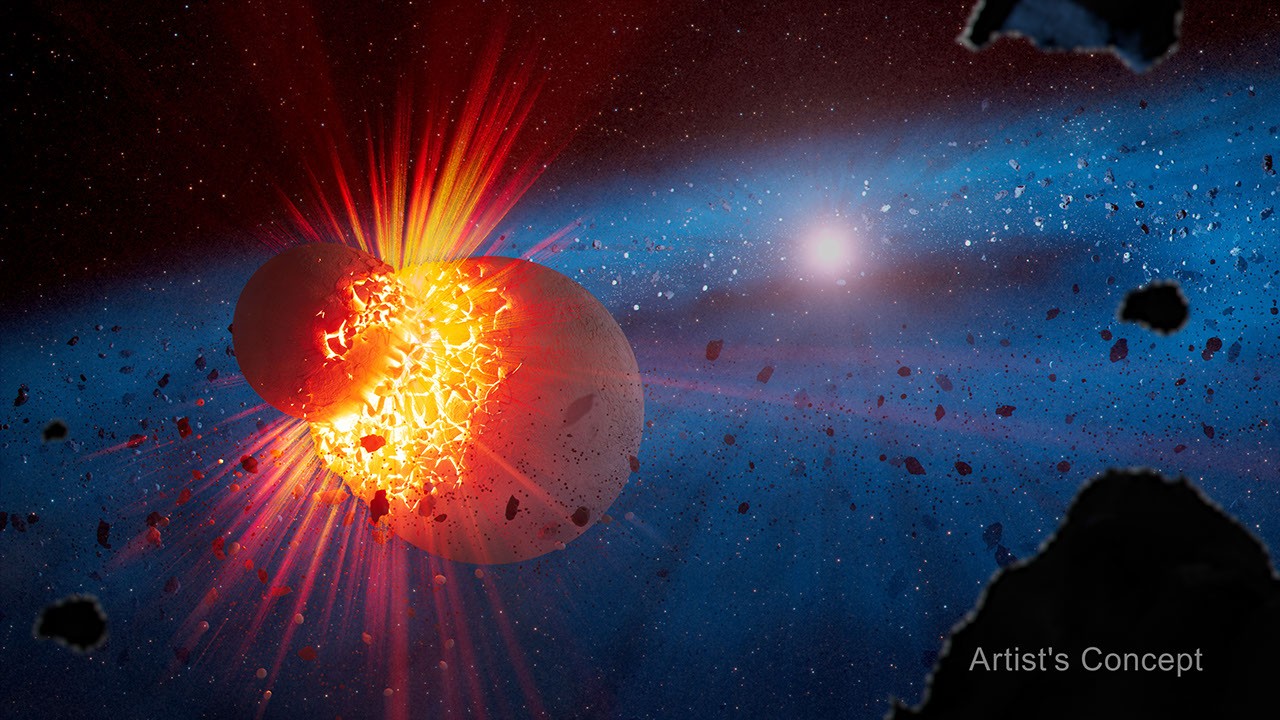
Astronomers used the James Webb Space Telescope to study extreme debris disks, a rare class of young stellar systems. These systems contain high concentrations of warm dust, similar to the environment during the formation of our own solar system.
The research team compiled a sample of 21 extreme debris disks, including 16 observed by Webb and five from archival data of the retired Spitzer Space Telescope. Scientists estimate that only about 1% of young stars exhibit these signatures.
Analysis revealed that these disks share three properties: smaller dust grains, high concentrations of warm dust, and irregular brightness variations. The team categorized the disks into silica-rich and silica-poor based on their mineral composition.
Silica-rich disks, representing about one-third of the sample, likely result from high-energy collisions between Mars-sized objects. These are found only around stars younger than 300 million years.
Silica-poor disks, making up the remaining two-thirds, suggest lower-energy impacts between Moon-sized bodies. These disks persist across a wider range of stellar ages and show greater brightness variability.



