

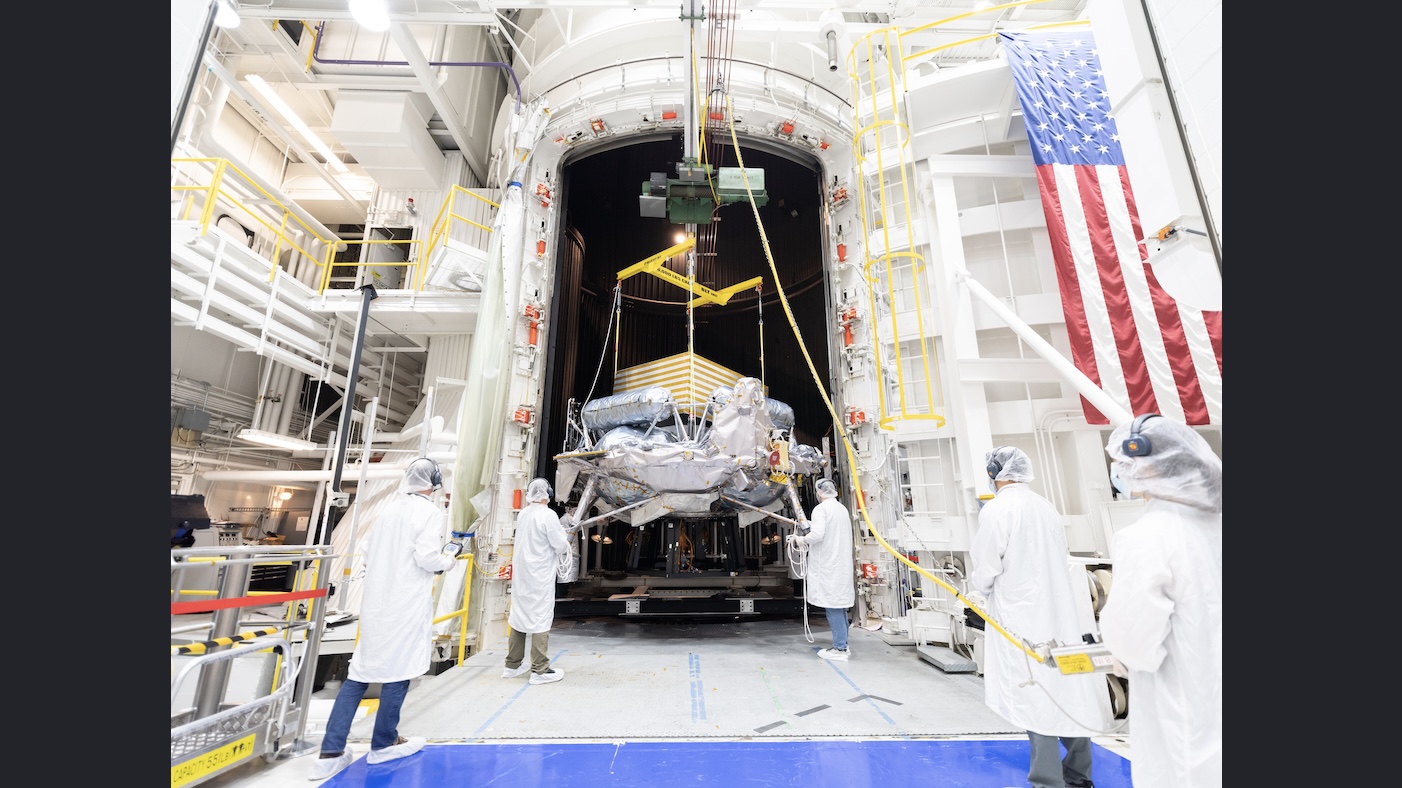
The Griffin-1 lunar lander, developed by Voyager Technologies, has successfully completed a series of environmental tests at NASA's Jet Propulsion Laboratory in Southern California. The spacecraft underwent rigorous simulations to ensure it can withstand the vacuum of space, extreme temperature fluctuations, and the intense vibrations and acoustic stress associated with a rocket launch.
During the testing phase, which began in July, the 1 265-kilogram lander was subjected to temperatures ranging from minus 100 degrees Celsius to 75 degrees Celsius within a thermal vacuum chamber. Engineers also conducted electromagnetic interference testing and mass property measurements to confirm the vehicle's navigation and flight readiness.
As part of NASA's Commercial Lunar Payload Services initiative, Griffin-1 is scheduled to launch later this year on a SpaceX Falcon Heavy rocket. The mission aims to deliver over 455 kilograms of cargo to the Nobile Crater near the lunar South Pole, including the FLIP rover from Astrolab.
The lander is designed to carry 10 science and technology demonstrations from six different countries. Following the completion of testing at JPL, the spacecraft has been returned to the Voyager Lunar Systems facility for final assembly and launch-readiness operations before its transport to Cape Canaveral.



