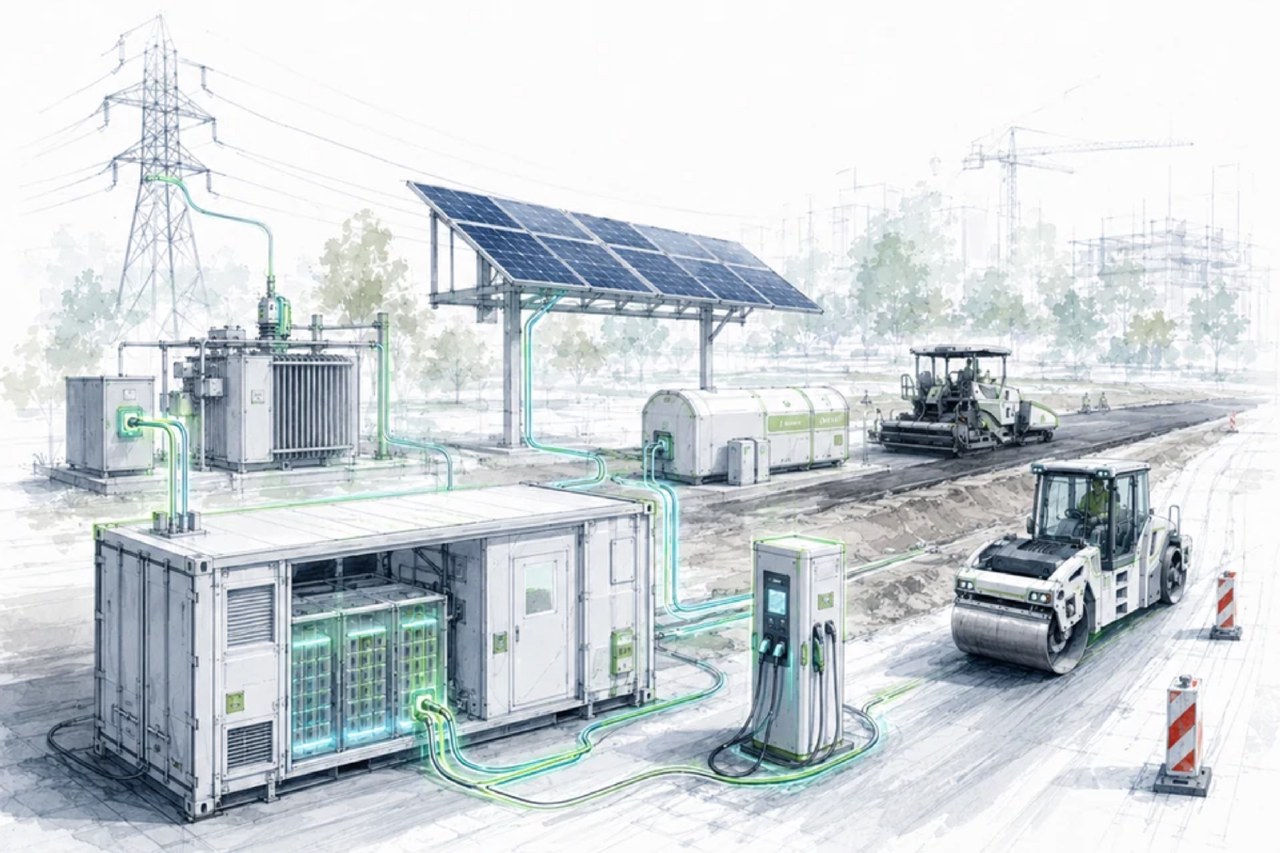
The Volta Via research project, led by Zeppelin Rental and RWTH Aachen, analyzed the electrification of road construction sites. The study found that electric models are currently available for up to 86 per cent of required machinery classes, though they do not yet fully match diesel equipment in continuous power or operational flexibility.
Researchers modeled electricity demand for motorway renovations in the D-A-CH region, estimating an annual requirement of 44 GWh. The report highlights that local grid capacity is more critical than total volume, noting a peak demand of 378 kW for intensive construction phases. Solutions for power supply include medium-voltage connections or mobile storage systems.
Operational costs for electrified machinery could drop by over half by 2027 and to one-eighth of current levels by 2050, excluding procurement expenses. Greenhouse gas emissions could potentially fall by 80 per cent in 2027 and 97 per cent by 2050, depending on energy sources and site conditions.
The project proposed an electrification index for public tenders to incentivize lower-emission machinery. This index serves as a bonus criterion rather than an exclusion factor. The study was funded by the D-A-CH Cooperation on Traffic Infrastructure Research 2024, involving authorities from Germany, Austria, and Switzerland.