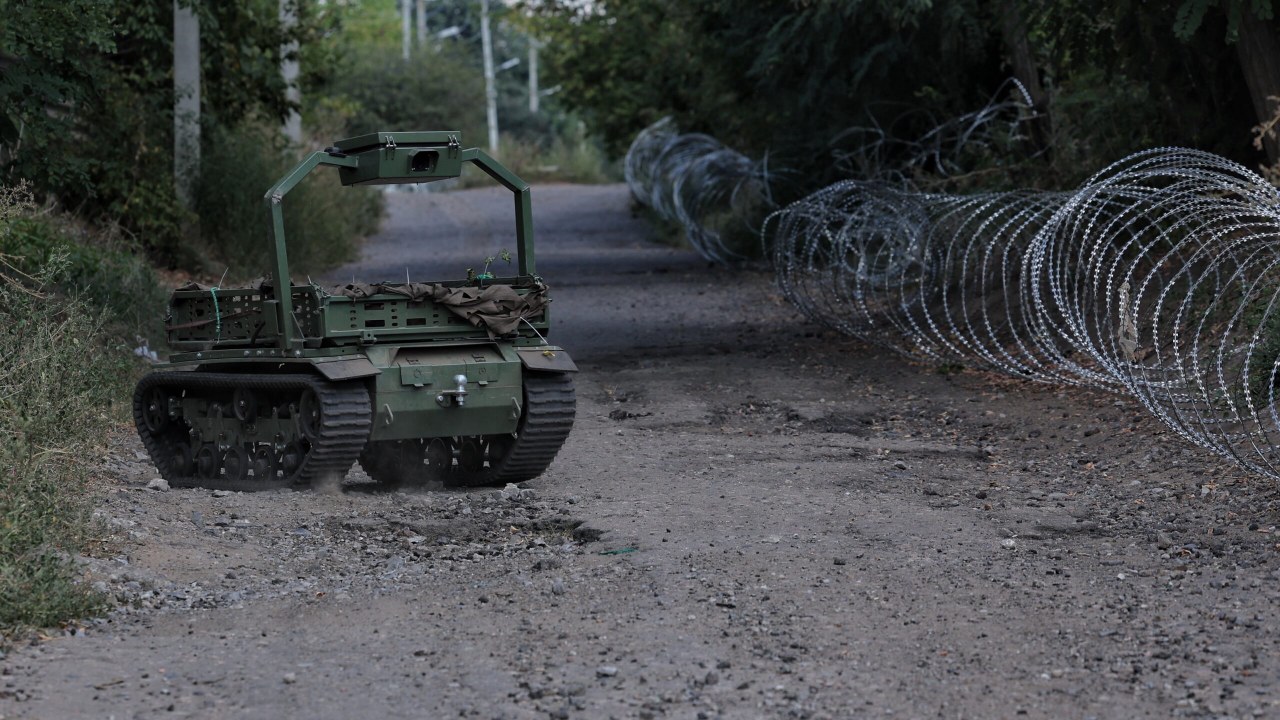
On September 21, 2026, the Ukrainian Third Army Corps conducted an airborne assault using heavy bomber drones to deploy explosive ground robots over six miles behind Russian frontlines. This operation targeted enemy supply lines, marking a significant use of robotic delivery systems in combat.
The Third Army Corps also utilized ground robots to clear antipersonnel mines from over 18 miles of routes, replacing the need for two sapper companies. Currently, remote-controlled robots handle approximately 60 percent of mine-clearing tasks within the unit's operational area.
These robotic deployments are part of Operation Vivaldi, which began in May 2026 and has reclaimed up to 96 square miles of territory. The operation successfully countered a Russian pincer movement aimed at encircling cities in eastern Ukraine.
Ukraine's tactical success is supported by drone strikes on Russian fuel supplies and the neutralization of about 20,000 Russian drones by Ukrainian electronic warfare systems. These efforts have forced the withdrawal of Russia's elite Rubicon drone unit from the region.
Despite these setbacks, the Russian military continues to move armored vehicles and drone units toward Dobropillya in the Donetsk Oblast. Russia is also expanding its hybrid warfare efforts, including incidents involving drone boats near offshore gas sites and attacks on aircraft in Germany.