

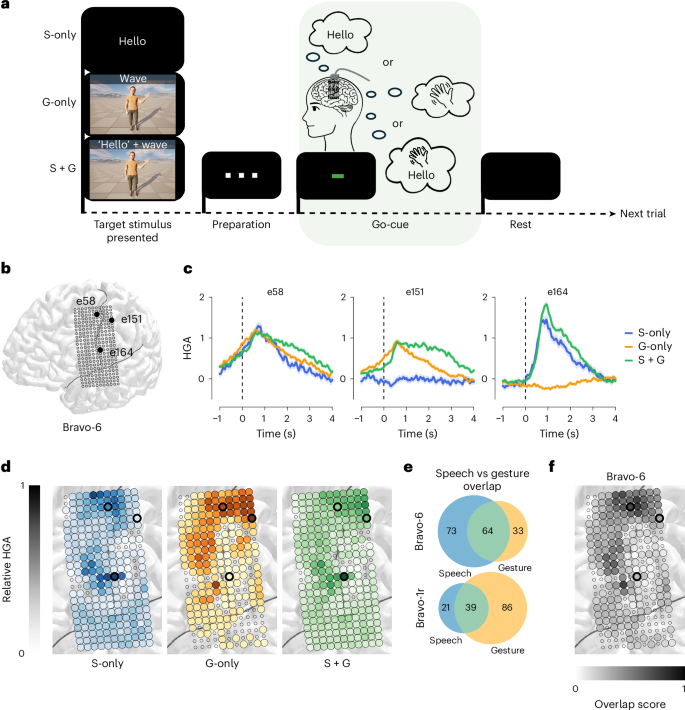
The National Institutes of Health announced the development of a new brain-computer interface capable of simultaneously decoding intended speech and upper-limb movements. This system allows patients with paralysis to control a full-body virtual avatar that reproduces both vocalizations and physical gestures in real time.
The research was conducted by the University of California, San Francisco, and published in the journal Nature Neuroscience. The study involved three patients suffering from conditions such as ALS and brainstem stroke, which caused varying degrees of vocal and limb paralysis. Surgeons implanted thin electrode arrays into the sensorimotor cortex of these participants.
Previous brain-computer interfaces were limited to decoding either speech or movement individually, with performance dropping when attempting to combine both. The new system processes both modes of communication simultaneously. Researchers noted that brain signals for synchronized expression differ from those for isolated speech or gestures, requiring specific training for the decoder.
Currently, the device operates via a wired connection, with implanted sensors linked to an external processing unit. The research team plans to test a fully implantable wireless version in the near future to evaluate its performance and stability for long-term use.


