

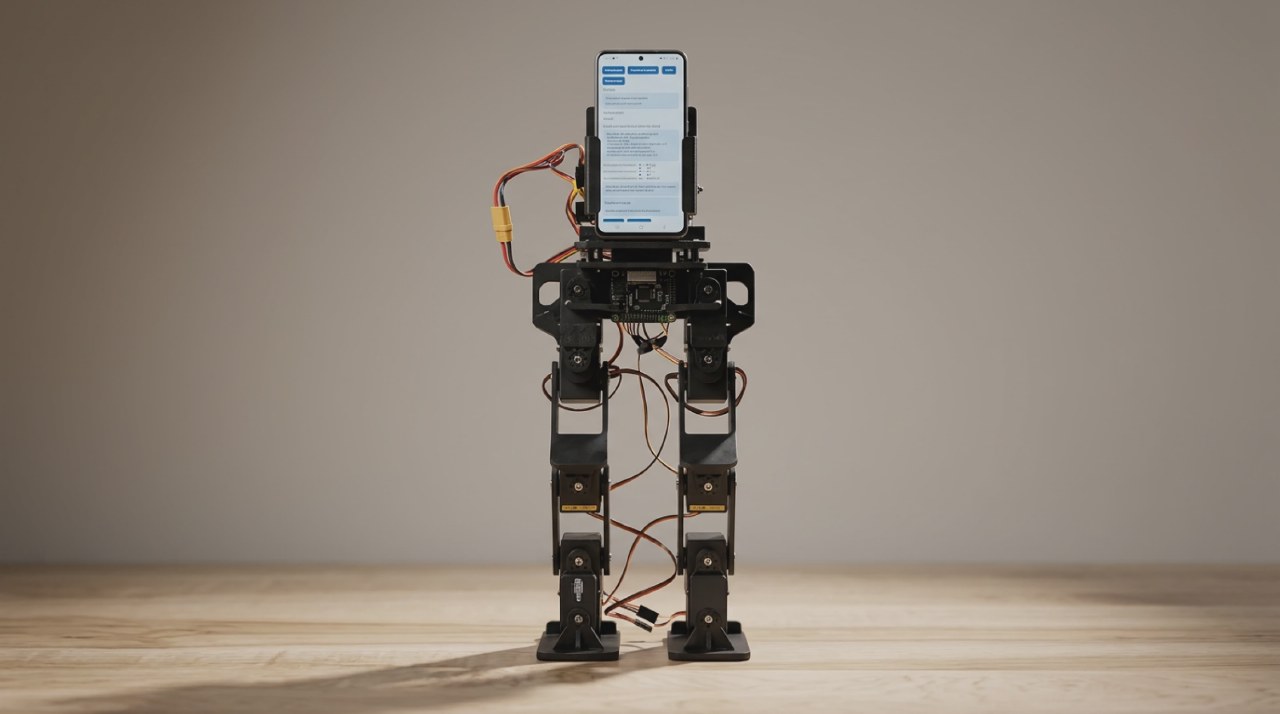
Researchers at UCLA's Robotics and Mechanisms Laboratory (RoMeLa) have developed PhoneBot, a bipedal humanoid robot that utilizes an Android smartphone as its primary computing and sensing unit. The robot stands 48.3 centimeters tall and weighs 1.8 kilograms, including the phone and battery. It features 13 low-cost servo motors, with six in each leg and one for torso rotation.
The hardware cost for the robot is estimated at $400, excluding the smartphone. This is significantly lower than other research platforms, which typically range from $3,500 to $13,800. The design aims to lower the barrier for students and researchers to engage in humanoid robotics by repurposing existing consumer electronics.
The smartphone acts as the robot's brain, using its camera for visual tracking and its internal inertial measurement unit (IMU) for posture sensing. Control commands are sent via Wi-Fi to a small onboard computer, which then relays instructions to the motors. The team used reinforcement learning in a simulated environment to train the robot's walking and balancing capabilities.
Testing included four Android devices: a 2017 Honor 9, Moto G 2025, Samsung Galaxy A16 5G, and Moto G 2024. While all supported core functions like walking and visual processing, software compatibility varied. Future development plans include adding lightweight arms, improving navigation on uneven terrain, and integrating large language models directly onto the phone.


