

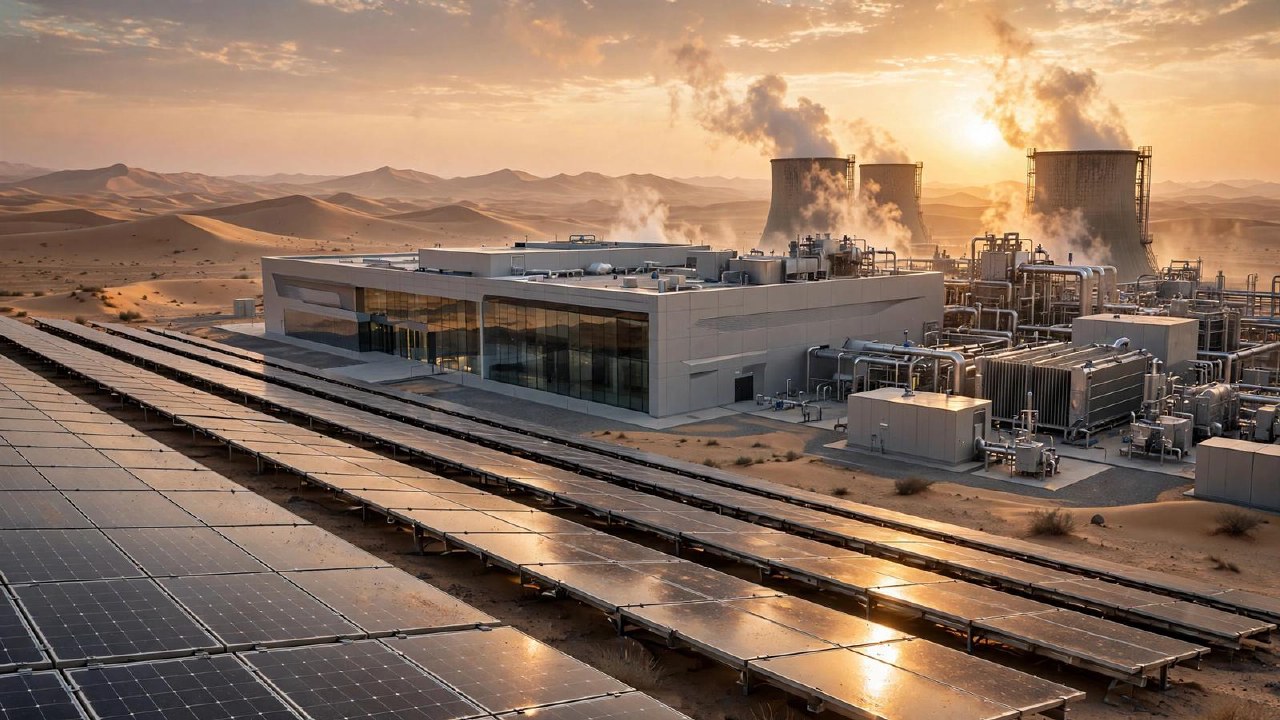
The UAE Ministry of Foreign Affairs released the report titled Crosscurrents: Navigating the AI-Water-Energy Nexus. It highlights the dual impact of artificial intelligence on water resources, noting that the technology increases pressure on water supplies through chip manufacturing, power generation, and data center cooling while simultaneously offering tools for better resource management.
Projections indicate that direct water consumption by data centers will roughly double by 2030, reaching 9.32 trillion liters. The report notes that indirect water usage linked to energy production and semiconductor manufacturing often exceeds the direct consumption of the facilities themselves.
The document cites examples from the United States, Malaysia, Chile, and Ireland, where public concerns over water and electricity access have led to delays or redesigns of major data center projects. In January, the UN reported that certain global regions have reached a state of water bankruptcy, characterized by irreversible depletion.
To address these challenges, the UAE proposes the MaiWater project, which integrates AI with renewable energy, advanced cooling, and strategic water storage. The report outlines five recommendations, including international cooperation, mandatory resource reporting, and the adoption of low-water technologies.
The UAE and Senegal are scheduled to host the 2026 UN Water Conference in Abu Dhabi this December. Deputy Prime Minister Sheikh Abdullah bin Zayed emphasized that governments and industries must manage water, energy, and digital infrastructure as interdependent systems rather than isolated sectors.

