

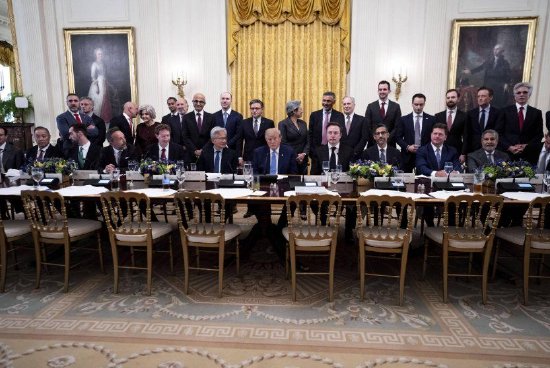
President Trump announced the formation of the Super Intelligence Force (SIF) on October 4. The task force is led by Director of National Intelligence Jay Clayton, with participation from the Federal Trade Commission, the Pentagon, and the Office of Personnel Management. The group reports directly to the President and the White House Chief of Staff.
The SIF aims to coordinate federal AI activities, maintain US leadership in the field, and protect public interests. Its scope includes engagement with consumers, public interest groups, religious organizations, critical infrastructure providers, and AI companies. Jay Clayton, who previously chaired the SEC, was confirmed as intelligence chief in July.
Prior to the SIF launch, major tech firms including Google, Anthropic, Meta, OpenAI, xAI, and Nvidia signed the White House Super Intelligence Agreement on September 29. The agreement mandates a four-tier control and audit mechanism for frontier models, covering internal monitoring, internal team reviews, independent external audits, and board-level oversight.
The agreement focuses on cybersecurity, biosecurity, and chemical threats, with companies committing to voluntary implementation of these safety standards. Participants will meet regularly to develop best practices, with potential future integration into formal federal regulations.
On September 29, Trump signed an executive order requiring federal agencies to replace the terms 'artificial intelligence' and 'AI' with 'super intelligence' and 'SI' in official communications and documents. The White House science policy lead must submit a proposal for a legal definition of 'super intelligence' within 60 days.


