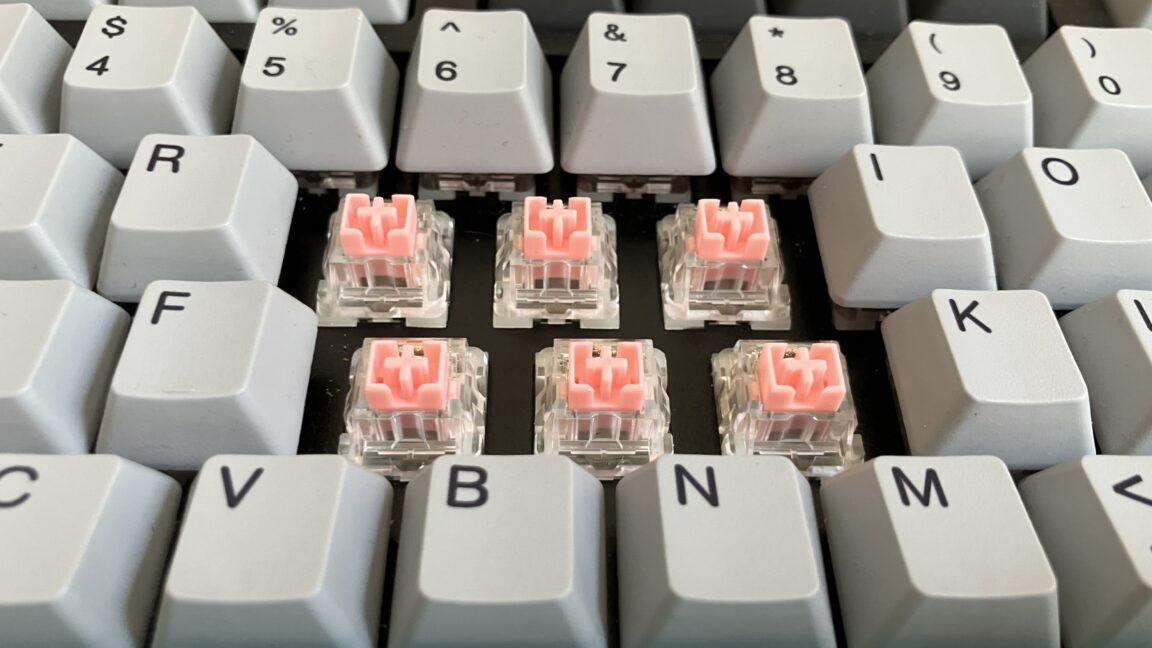
Contactless switches, including optical and Hall-effect designs, have gained popularity over the last six years, often commanding higher prices than traditional mechanical keyboards. Unlike standard mechanical switches that rely on physical contact between metal leaves, contactless variants use light beams or magnetic sensors to register inputs.
Manufacturers claim these switches offer greater longevity and immunity to oxidation. However, they require specialized PCBs, and hot-swappable options remain rare. Standard mechanical switches, such as the Cherry MX2A series, are now rated for up to 100 million keystrokes, rivaling the durability of contactless alternatives.
A key feature of contactless switches is adjustable actuation, allowing users to customize response points or enable analog input. However, testing by RTINGs on 14 keyboards from 11 brands revealed that actual actuation points often deviate from software settings by fractions of a millimeter.
Contactless switches eliminate the need for debouncing, a process required for mechanical switches to prevent multiple inputs from metal leaf contact. While debouncing typically adds 5 ms to 20 ms of latency, some modern mechanical switches reduce this to under 1 ms. Total system latency also depends on polling rates and connection types.
Optical switches, which use infrared light beams, first appeared in consumer keyboards in 2016. Razer notes that their optical designs use the switch stem as a shutter for light paths on the PCB. Electrostatic capacitive switches, such as those from Topre, utilize rubber domes and capacitance changes to register keypresses.