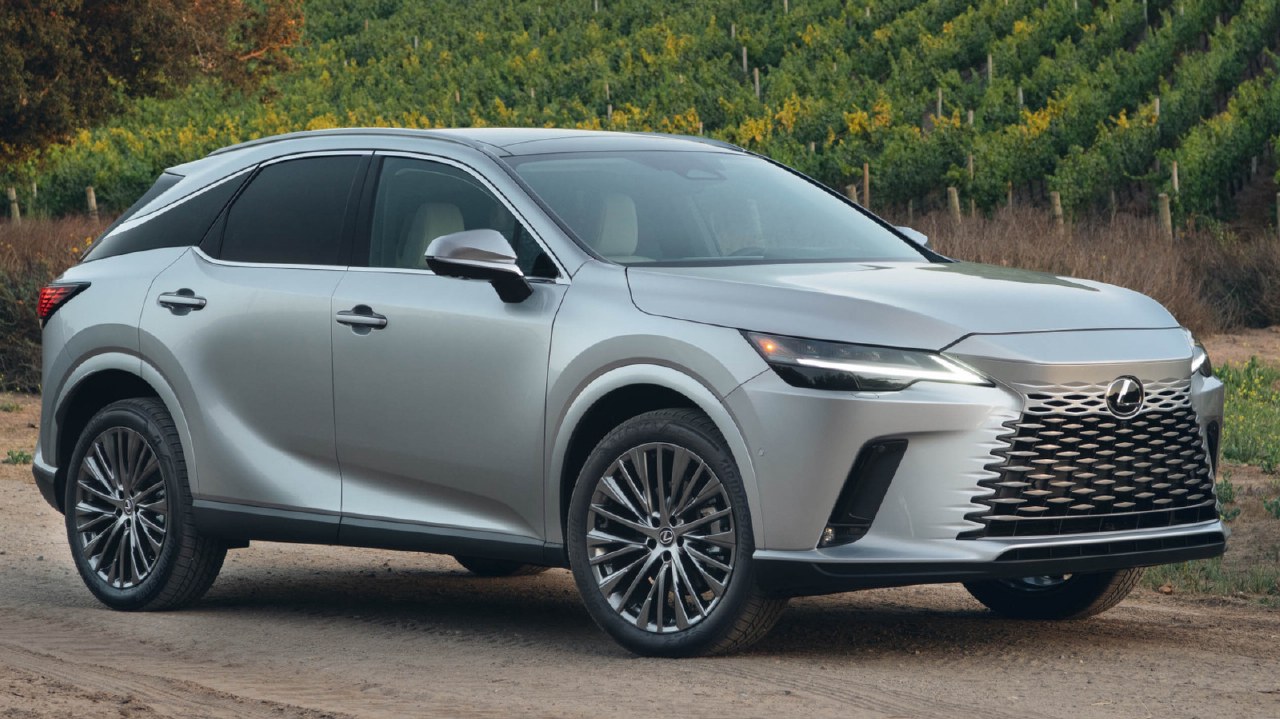
The Lexus RX model, which debuted in 1998, derives its name from the phrase Radiant Crossover. The company selected the term radiant to symbolize a bright future, while the X denotes its market position between luxury sedans and off-road vehicles. The model has undergone generational updates in 2004, 2010, 2016, and 2023, with a refresh scheduled for 2028.
Current naming conventions for the RX series no longer correlate directly with engine displacement. For instance, the RX 350 utilizes a 2.5-liter four-cylinder turbo engine, whereas the original RX 300 featured a 3.0-liter V6. The lineup also includes the RX 350h and the plug-in hybrid RX 450h+, both equipped with 2.5-liter four-cylinder electrified powertrains.
The flagship RX 500h F Sport Performance uses a hybrid 2.4-liter turbo engine producing 366 horsepower. Reports suggest a future GR version of the RX may feature a hybrid setup with a 2.0-liter engine and dual electric motors, potentially delivering 600 horsepower. The F and F Sport designations refer to the Fuji Speedway, where Lexus tests vehicle dynamics.
Lexus maintains a consistent naming hierarchy across its portfolio. Other crossover designations include LBX (Lexus Breakthrough Crossover), UX (Urban Crossover), NX (Nimble Crossover), TX (Touring Crossover), GX (Grand Crossover), and LX (Luxury Crossover). The electric RZ stands for Radiant Zero, indicating zero emissions.
The sedan and utility lineup follows a similar structure. The IS stands for Intelligent Sport, ES for Executive Sedan, and LS for Luxury Sedan. Additionally, the LC represents a Luxury Coupe, while the LM is designated as a Luxury Mover.