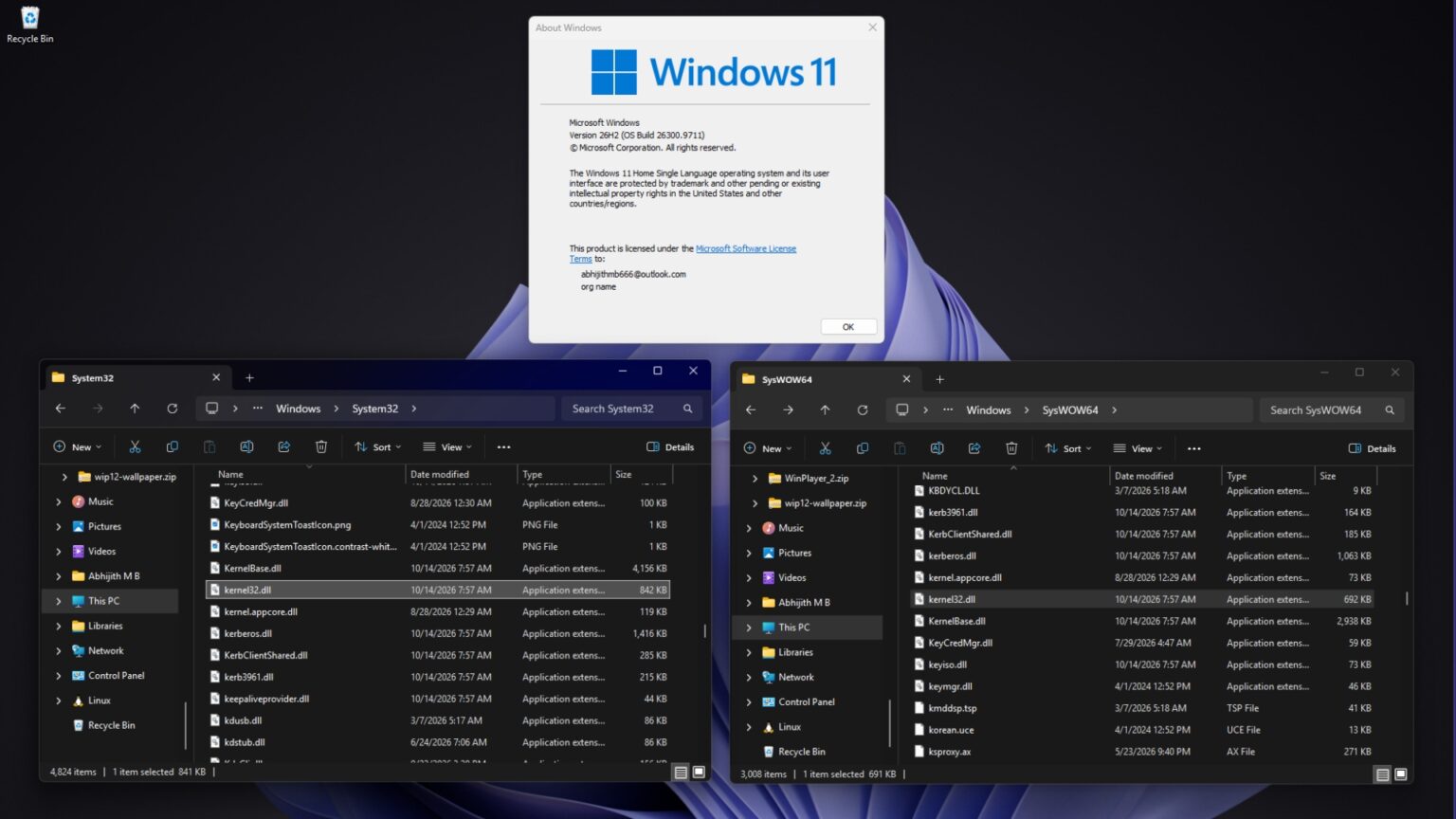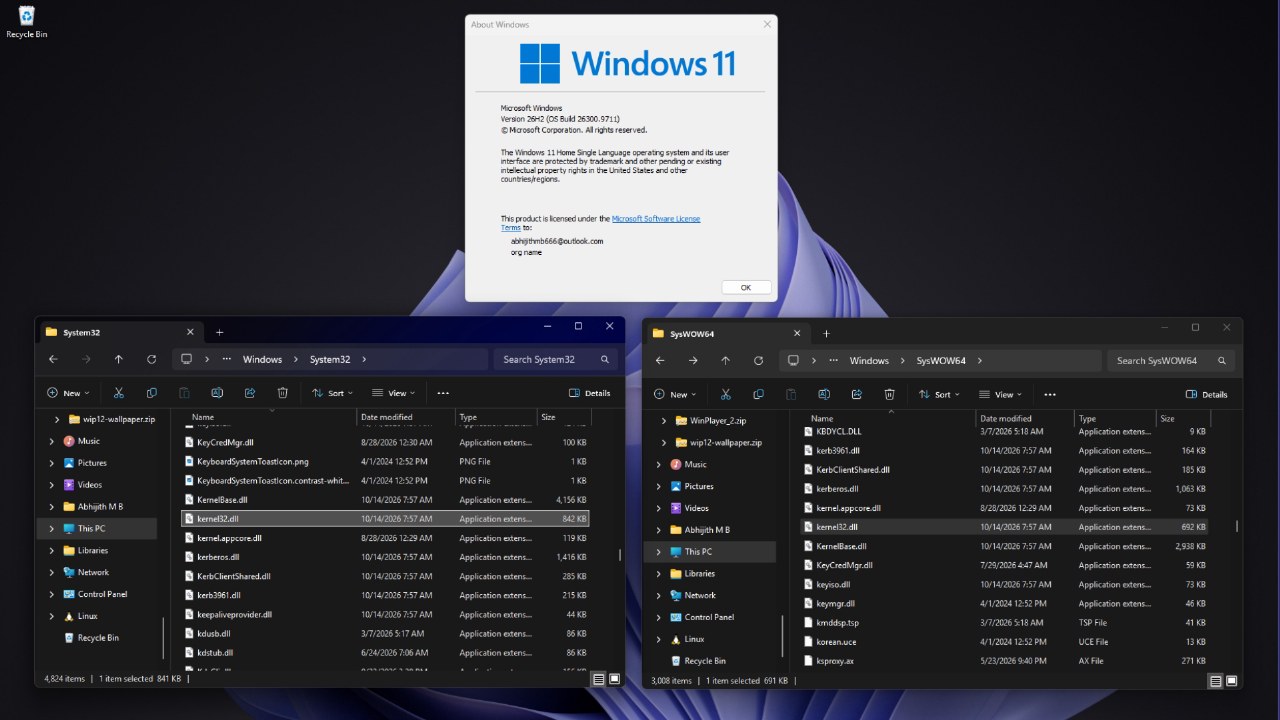
In 64-bit Windows, the System32 directory contains 64-bit system files, while the SysWOW64 directory holds 32-bit files. This naming convention persists because many legacy applications have hardcoded paths to System32, and renaming it would break software compatibility.
Microsoft uses the WOW64 (Windows 32-bit on Windows 64-bit) mechanism to manage this. When a 32-bit application attempts to access System32, the file system redirector silently routes the request to SysWOW64. This process is transparent to the software, allowing older programs to function without modification.
The '64' in SysWOW64 refers to the 64-bit environment, not the bitness of the files within it. Additionally, Windows provides a virtual path, Sysnative, which allows 32-bit applications to bypass redirection and access the native 64-bit System32 directory when necessary.
The system also employs registry redirection, such as HKEY_LOCAL_MACHINE\Software\Wow6432Node, and separate Program Files (x86) directories to isolate 32-bit and 64-bit components. These measures ensure that legacy software remains operational on modern Windows 11 systems.
While some subdirectories within System32 are exempt from redirection to allow shared access to data like network configurations, the core structure remains a result of prioritizing long-term software compatibility over intuitive directory naming.