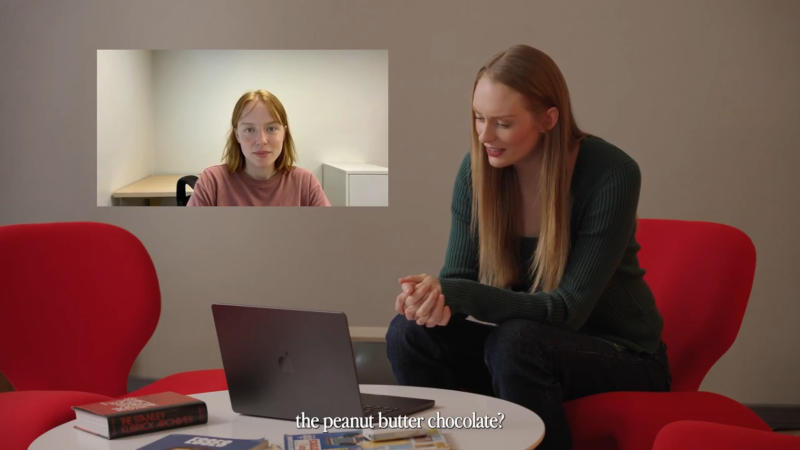
The American startup Tavus has introduced Griffin, a real-time video communication model. In a company experiment, 26 out of 54 participants, or 48 percent, identified the Griffin-Lite avatar as a human after a one-minute conversation. This compares to a 2.4 percent success rate for the company's previous system, where only one out of 41 participants was deceived.
Griffin utilizes a full-duplex video-to-video architecture, replacing the traditional sequential process of speech recognition, text processing, and synthesis. The system continuously monitors audio and video signals to determine response timing, allowing it to nod, interject, or change facial expressions while the user is still speaking. State evaluation occurs at intervals of less than one second.
The model, classified as a Human Interaction Model, generates 720p video in 320 ms segments and can clone a voice from a ten-second sample. On Nvidia H100 hardware, the average latency for audio-to-video conversion is 0.43 seconds. In the VideoFDB benchmark, Griffin-Lite scored 3.83 in audiovisual behavior generation and 3.73 in perception, compared to human benchmarks of 3.92 and 4.20 respectively.
Tavus currently provides access to Griffin-Lite to a limited group of testers. The company plans to implement safety measures, such as mandatory disclosure of AI interaction, before a wider release. Potential applications for the technology include training, practicing complex conversations, and remote user assistance.