Researchers at the University of Surrey have developed a manufacturing process for flexible perovskite solar panels that utilizes low-toxicity solvents. This method replaces traditional chemicals like dimethylformamide and acetonitrile, which are typically used in ink production and pose environmental and health risks.
The new ink formulation is based on a mixture of ethanol and 2-methyltetrahydrofuran, a solvent derived from agricultural and forestry waste. This composition allows for rapid drying at room temperature and eliminates the need for additional anti-solvent processing steps, reducing overall energy and material consumption.
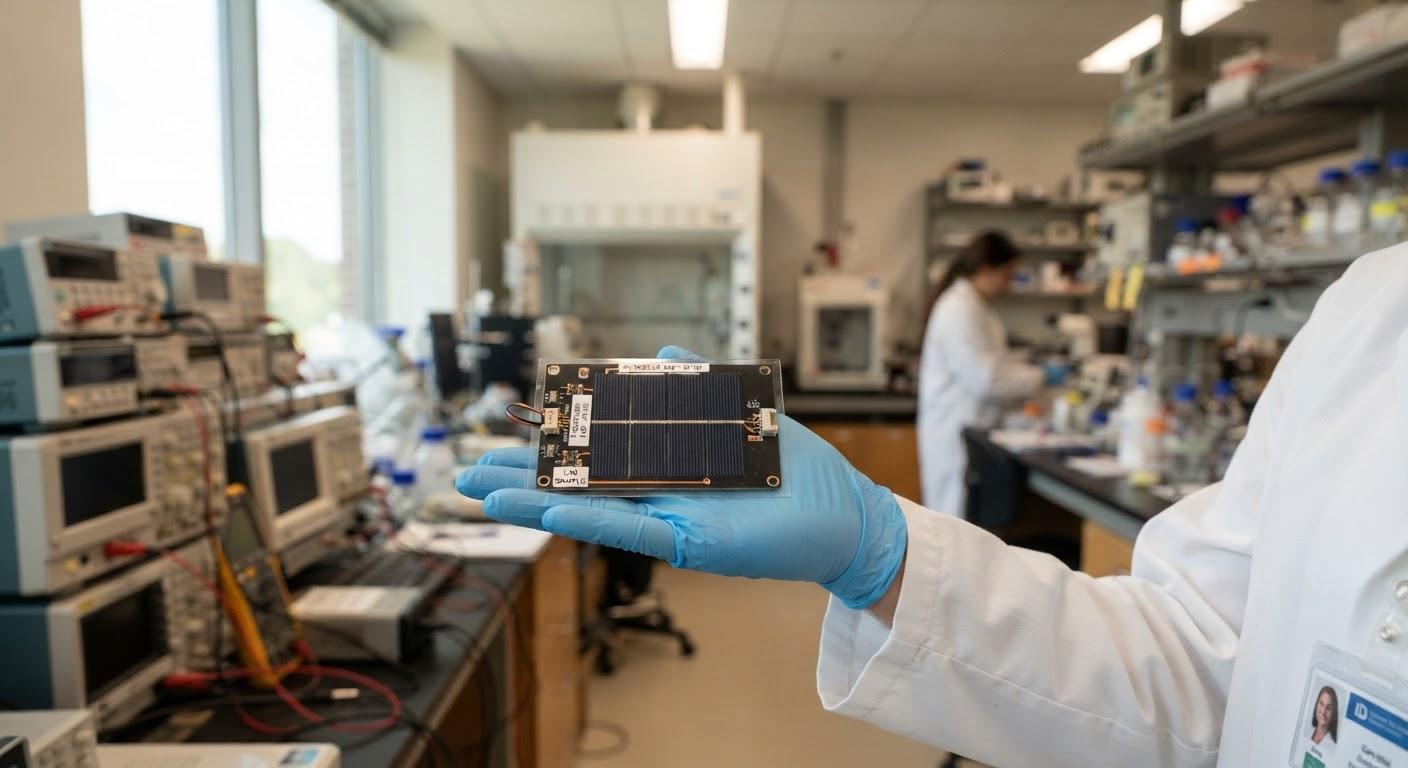
The team utilized a roll-to-roll printing technique, similar to newspaper production, to manufacture flexible mini-modules with an active area of 11.5 square centimeters. The process incorporates an inverted architecture with self-assembled monolayers, which minimizes the number of required intermediate layers.
The resulting solar modules achieved a power conversion efficiency exceeding 18.2 percent and demonstrated high stability under continuous illumination. The individual cells were integrated into a module using laser patterning, following the standard P1–P4 industrial design scheme.
According to lead researcher Ravi Silva, this approach reduces the need for specialized equipment for hazardous waste management. The technology is compatible with existing industrial production lines and is intended for applications in portable electronics, energy-generating windows, and space hardware.