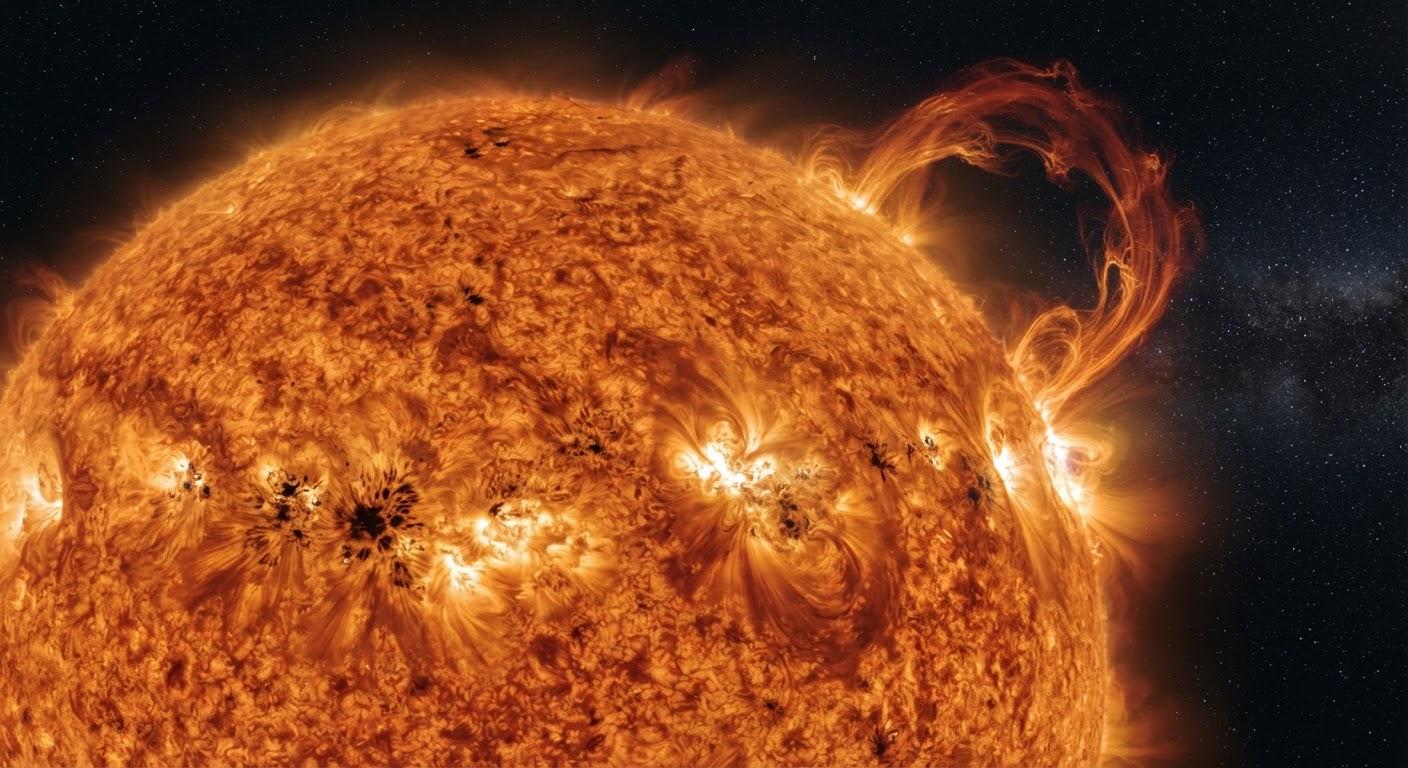
Solar activity has surged significantly, with space monitoring equipment recording 35 flares of class C and higher in less than two days. On Friday, November 6, 18 events were registered, followed by another 17 in the first 12 hours of Saturday. Experts anticipate the total count could reach 40 to 50 by the end of Saturday.
The current activity spike follows a period of relative calm earlier in the week, with only three events recorded on both Wednesday and Thursday. Among these was an M3.6 class flare, the strongest observed since early October. The primary source of this activity is a large group of sunspots located near the center of the solar disk.
For context, the current surge exceeds previous records for the year, such as the 19 flares observed on August 19, 2026. It also surpasses the 29 flares recorded on December 10, 2024. Scientists note that while the current frequent moderate flares may release energy gradually, there remains a risk of more powerful explosions.
Earth's magnetic field is currently in a disturbed state due to the planet entering the influence of a large coronal hole on Saturday night. While geomagnetic storms have not yet begun, experts warn that the situation could deteriorate if these solar flares combine with the effects of the coronal hole.