

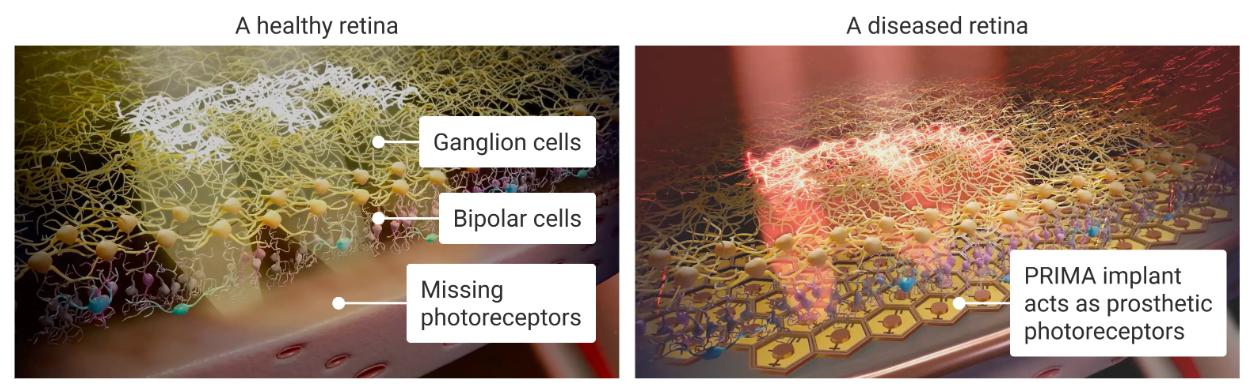
Science Corporation, led by Neuralink co-founder Max Hodak, has successfully implanted the Prima chip into a patient suffering from Stargardt disease. This hereditary condition, which destroys central vision, affects approximately 150,000 people globally. The surgery took place in May at the Sydney Eye Hospital as part of an ongoing clinical trial.
The 2x2 millimeter implant is placed at the back of the eye, replacing dead photoreceptors. It functions alongside glasses equipped with a camera that transmits visual data to the chip. During rehabilitation sessions, the patient was able to recognize letters and read words. Currently, the vision is described as high-contrast, black-and-white, and sharp, though limited in field of view.
The Prima system is already commercially available in Europe for patients with geographic atrophy, a form of age-related macular degeneration. Science Corporation is now testing its application for other conditions. The company plans to release a next-generation implant with a wider field of view and smaller electrodes within a year, aiming for near-normal clarity within five years.
In addition to ocular implants, Science Corporation is developing a brain-computer interface. Unlike Neuralink devices that penetrate brain tissue, this system uses a sensor placed on the surface of the brain to monitor neurological activity.


