

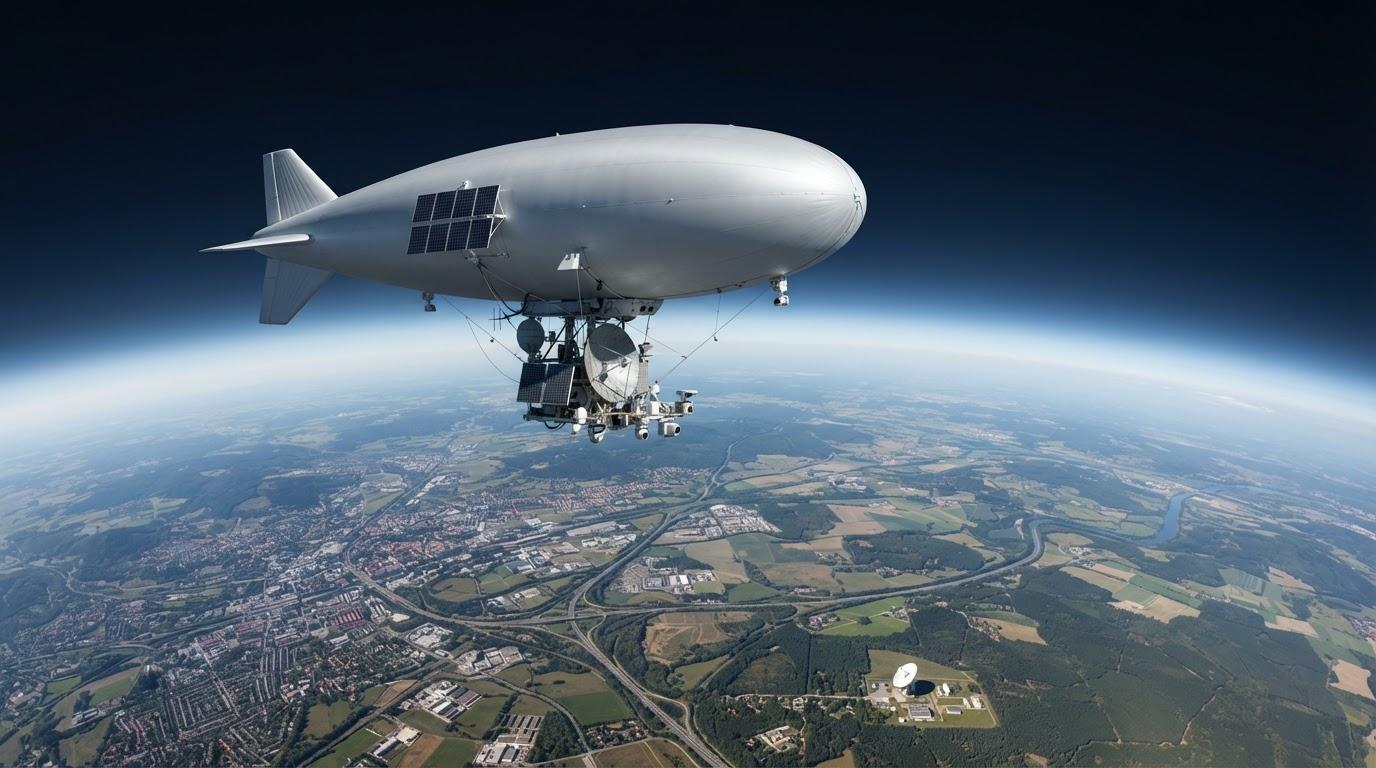
The test took place on September 3, 2026, as part of the Barrage project. An unmanned stratospheric balloon successfully established a stable 5G connection with a ground station from an altitude of 17 kilometers. During the flight, the device transmitted 2K video to the ground for over 80 minutes.
The project utilizes the 5G NTN standard, which is designed for non-terrestrial network communications. This technology aims to facilitate both user data transmission and control channels for unmanned aerial vehicles. The platform used, Barrage-1, was first launched in February 2026.
The Barrage-1 stratostat is designed to operate at altitudes up to 20 kilometers and can carry a payload of up to 100 kilograms, including telecommunications equipment. These platforms are intended to serve as pseudo-satellites, providing coverage in regions where traditional ground infrastructure is impractical.
The Foundation for Advanced Research (FPI) suggests that such stratospheric platforms could bridge the gap between terrestrial cellular towers and satellite communications. Potential deployment areas for this technology include Siberia and the Russian Far East.



