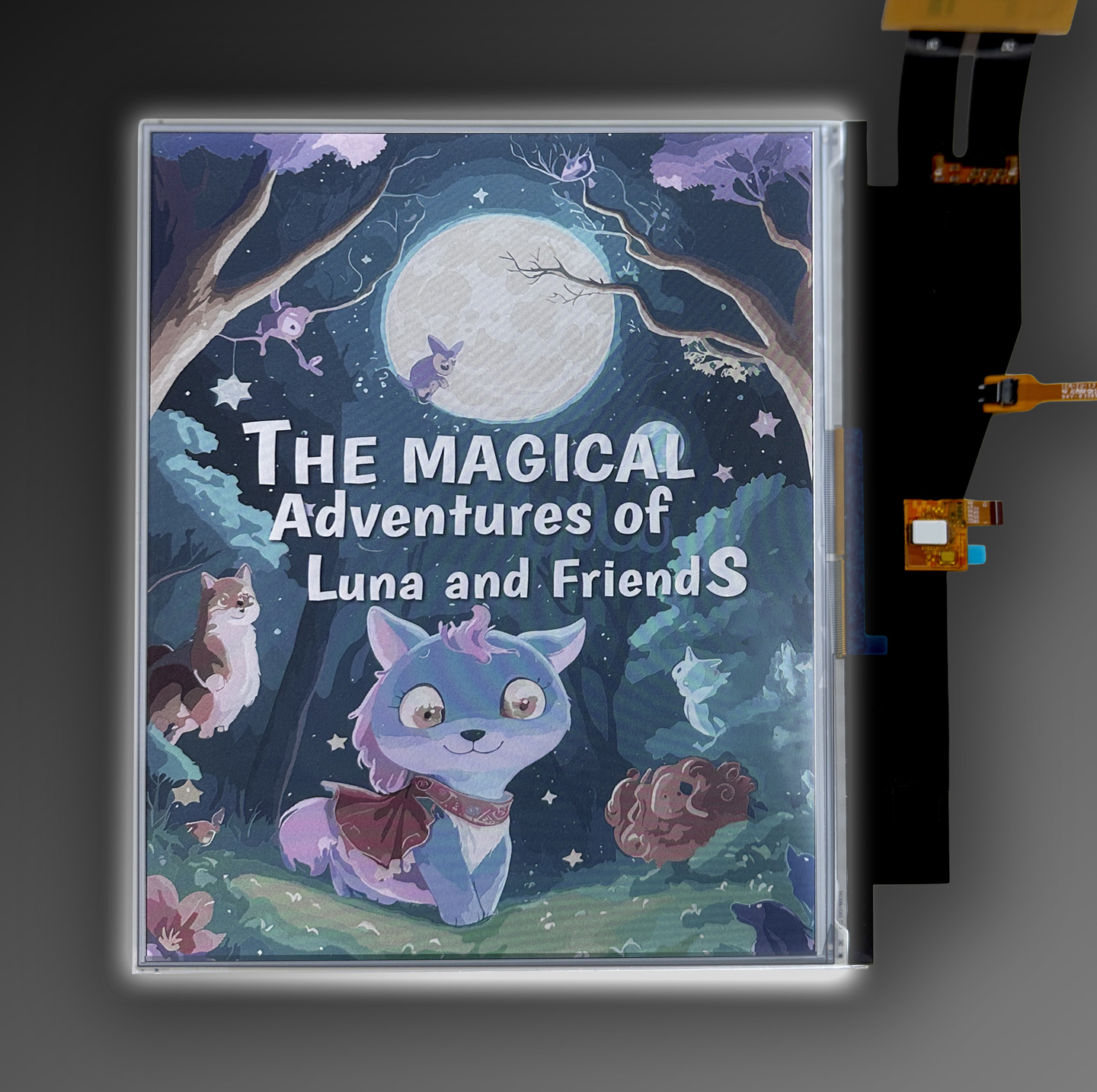
The developer successfully implemented video playback on an E-Ink display using an ESP32-S3 microcontroller board priced at $71. The system achieves a frame rate of 20 fps without the use of an FPGA or a PC, utilizing a custom open-source driver called EPD_Painter.
The hardware setup involves an ESP32-S3 board and an E-Ink panel without an integrated controller or frame buffer. The driver manages the display by processing data in 64-pixel blocks using the ESP32-S3's vector coprocessor, which performs operations in 15 assembly instructions per line.
Memory management is optimized by distributing tasks across different memory areas: 518 KB of PSRAM for the canvas and 130 KB of internal SRAM for delta calculations and line buffers. The system uses a 2-bit per pixel format, with each frame requiring approximately 4.4 KB of data.
The driver employs a delta-engine that only processes changes between frames, significantly reducing the workload. By utilizing row masks, the system skips static areas of the screen, allowing for efficient video playback on the slow-responding electrophoretic display.
To ensure accurate color transitions, the developer used a flatbed scanner as a photometer to analyze the physical behavior of the E-Ink panel. This testing revealed that the panel's internal capacitance holds the charge, which is critical for determining the energy dose applied to the pixels.