

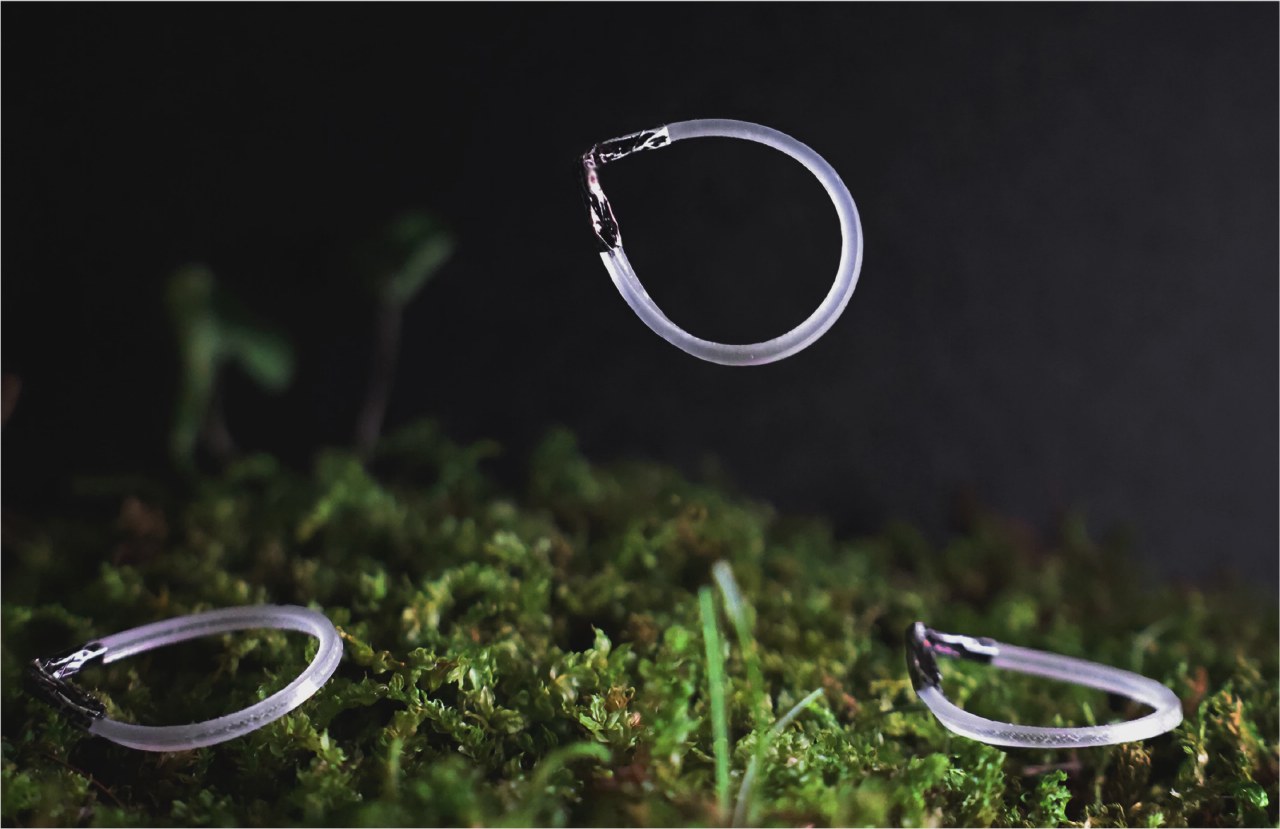
Researchers at North Carolina State University have developed a soft micro-robot named Ring Leaper. The device operates without motors, batteries, or electronic chips. It consists of a liquid crystal elastomer (LCE) loop and a V-shaped aluminum sleeve. The robot converts infrared light into mechanical energy to perform continuous jumping cycles.
When exposed to infrared light, the LCE material contracts, causing the structure to twist and store elastic potential energy. Once the stress reaches a threshold, the aluminum sleeve strikes the ground, launching the robot into the air. The device automatically resets its shape mid-air due to material memory, allowing for hundreds of consecutive jumps.
The robot's movement is controlled by adjusting the angle of the V-shaped sleeve. A 120-degree angle results in crawling, 90 degrees enables forward jumping, and 50 degrees allows for vertical jumps reaching up to 80 times the robot's height. Adding weight to the structure can also improve stability and jump distance.
The micro-robot has been tested on various surfaces, including grass, sand, gravel, and slopes. While the technology currently requires an external infrared light source and is not yet a commercial product, researchers believe this design could be applied to environmental monitoring, swarm robotics, and search-and-rescue operations in disaster zones.


