Raspberry Pi has released a major update for its official desktop operating system. The update focuses on improving graphical fluidity, multitasking responsiveness, and system-level energy efficiency across its single-board and all-in-one devices.
The system now utilizes an updated Linux Long-Term Support (LTS) kernel. This change enhances process scheduling, memory management, and I/O throughput, while optimizing hardware acceleration for Broadcom BCM2712 SoCs. Benchmarks show performance gains in multi-threaded compilation and file operations, especially on Raspberry Pi 5 models.
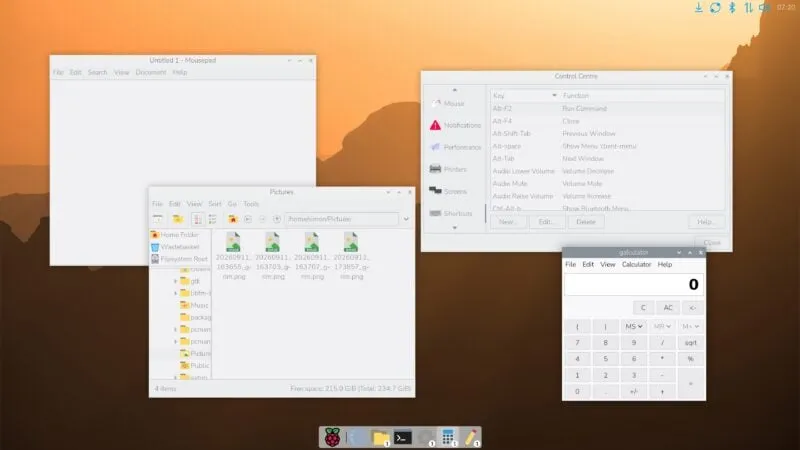
The update introduces deep optimizations to the Wayland-based desktop stack and the Labwc compositor. These changes reduce lag during window manipulation and improve fractional scaling on high-resolution displays. Input latency has been decreased to provide a desktop experience comparable to traditional PCs.
The software suite includes a redesigned control center for managing display settings, wireless networks, and audio routing. Tools for GPIO pins and camera modules have been updated for better compatibility. Pre-installed software, including the Chromium browser, has been upgraded to the latest stable versions.
Users can download the new system image from the official Raspberry Pi website or via the Raspberry Pi Imager tool. Existing users can perform the upgrade directly through the terminal using the APT package manager.