

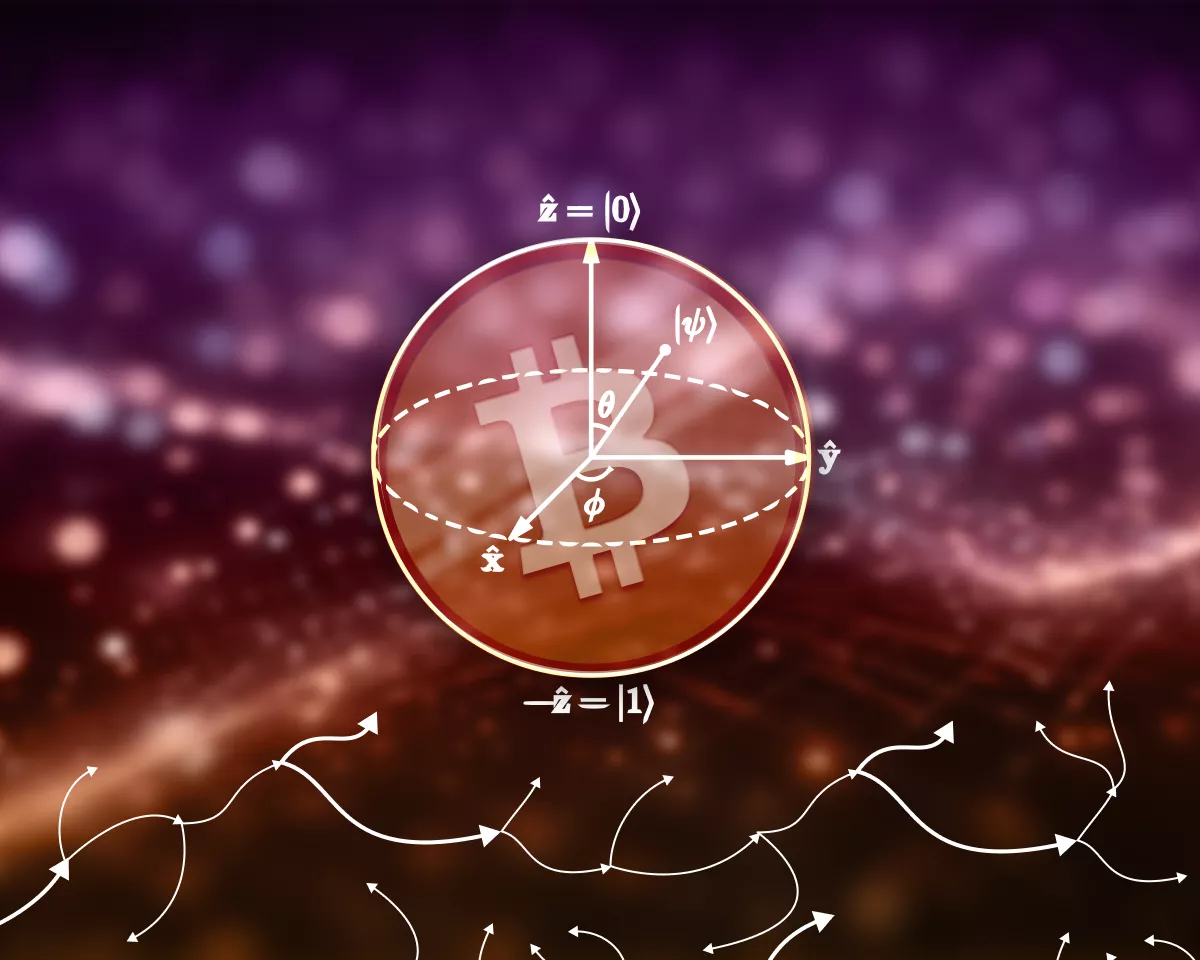
A group of over 100 researchers, supported by AI agents, has reduced the estimated computational complexity for a key stage of a potential quantum attack on Bitcoin and Ethereum. The new estimate is 1.5 billion units, which is more than 50% lower than the 3 billion unit benchmark previously set by Google Quantum AI.
The research team, which included experts from Ethereum Foundation, Theta Labs, and StarkWare, developed a quantum circuit for the Shor algorithm. This circuit utilizes 1,151 logical qubits and approximately 1.3 million Toffoli gates. The project was conducted over eight weeks as part of the ECDSA.Fail challenge initiated by Eigen Labs.
The study focused on optimizing the point addition operation on elliptic curves, which is central to the Shor algorithm. While the researchers achieved significant efficiency gains, they noted that the current results do not enable an actual hack, as the model excludes physical error correction and full hardware requirements for a real-world quantum computer.
Further iterations of the research have already produced a design requiring 813 logical qubits, albeit with a higher computational volume. Experts emphasize that while an immediate threat is not imminent, the transition to quantum-resistant cryptography remains a long-term challenge for blockchain networks.

