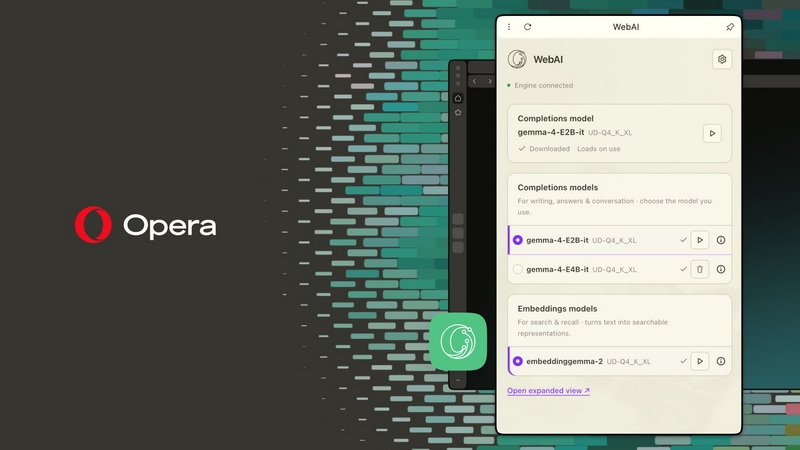
Opera has introduced a new web standard called WebAI, designed to enable the execution of AI models directly within a web browser. This approach eliminates the need for cloud-based services, as all processing occurs locally on the user's device. The standard is built to be compatible with various open-weight AI systems, including Google's Gemma and Apple's on-device foundation models for Mac users.
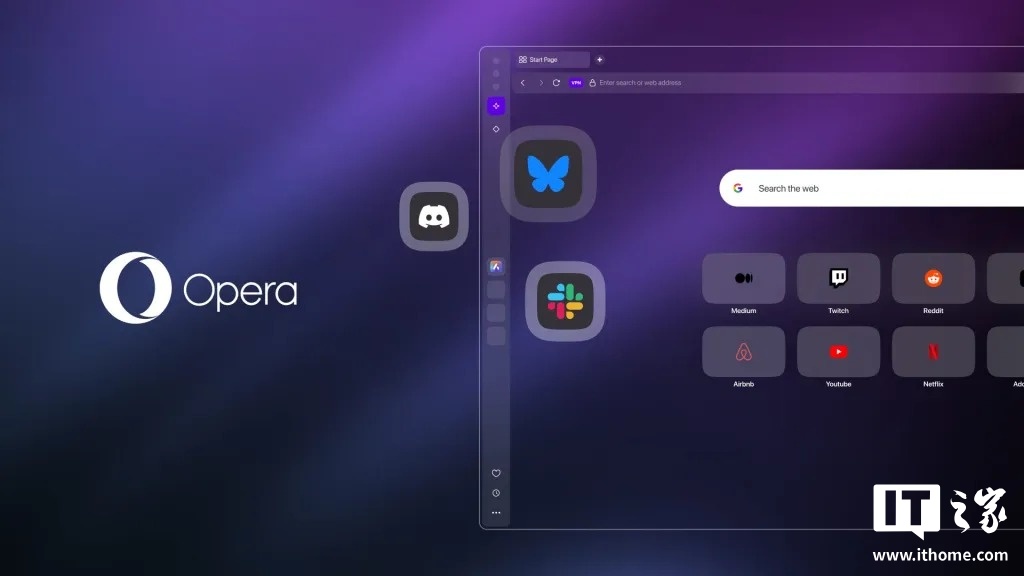
The WebAI feature is currently available as an early preview in the Opera One browser. The company plans to extend this functionality to its Opera GX browser, tailored for gamers and streamers, and the Opera Neon browser, which focuses on AI agent tasks. Users must manually opt-in to enable WebAI capabilities within their browser settings.
By shifting AI processing to the local hardware, Opera aims to enhance user privacy, as personal data does not need to be transmitted to corporate servers. This model also removes the requirement for paid cloud AI subscriptions. Developers can integrate AI features into their products without the need for dedicated AI infrastructure or per-request fees.
Opera notes that WebAI supports tasks such as text generation, content classification, and information relationship analysis. However, the company warns that local AI execution relies on the user's specific hardware configuration. Running these models directly on a computer increases hardware load, which may impact overall system performance.