

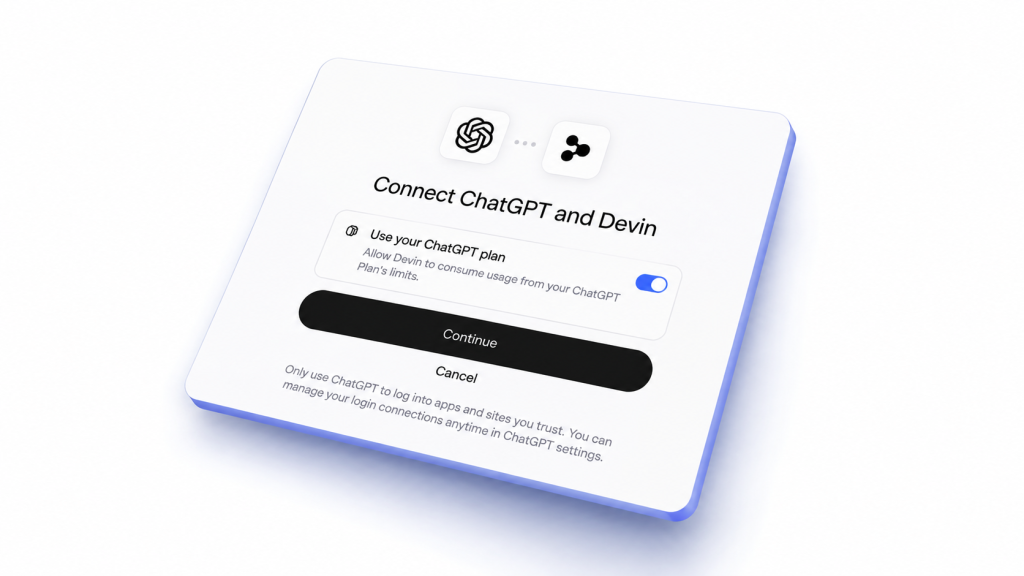
OpenAI has officially launched the Sign in with ChatGPT service, allowing third-party developers and enterprises to integrate ChatGPT accounts as a unified authentication method for their applications. This move marks the company's entry into the digital identity verification market, positioning it to compete directly with established providers like Google, Apple, and Microsoft.
The new authentication system is built on industry-standard security protocols. By integrating this interface, third-party services enable users to log in without creating separate passwords. For developers, this integration aims to reduce user churn and simplify identity management, while for OpenAI, it serves as a strategy to embed its brand and technology into a vast array of external websites and corporate tools.
Despite the launch, industry experts remain cautious regarding the widespread adoption of this feature. OpenAI must prove its capabilities in data privacy, account security, and service reliability to compete with the long-standing compliance frameworks of established tech giants. A significant challenge lies in gaining the trust of enterprises that require strict control over data sovereignty and internal access permissions.
The introduction of Sign in with ChatGPT is viewed as a indicator of generative AI platforms evolving into critical infrastructure. By leveraging its large active user base, OpenAI aims to convert its traffic advantage into a long-term network effect, potentially reshaping the competitive landscape of internet identity verification.


