

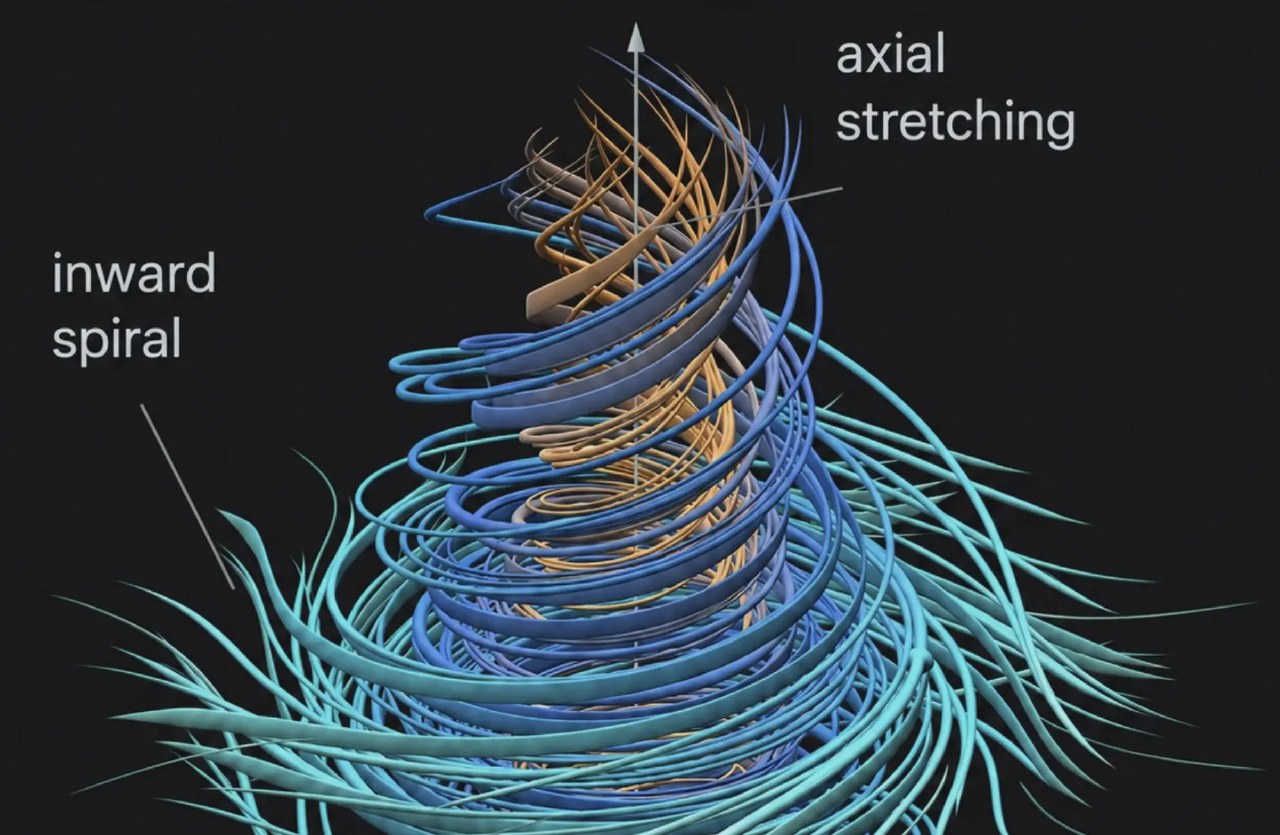
New York University professor Tristan Buckmaster has accused OpenAI of using non-public research to solve a Millennium Prize Problem. Buckmaster claims that OpenAI obtained information about his and collaborator Alpöge's progress on the Navier-Stokes existence and smoothness problem before it was published, using massive computing resources to publish a full proof first.
The Navier-Stokes problem is one of seven Millennium Prize Problems established by the Clay Mathematics Institute, with a reward of $1 million. OpenAI reported that its work on the proof took one week and consumed 300 billion output tokens, which equates to approximately $22.5 million in computing costs based on current Astra rates.
Buckmaster asserts that the specific strategy used to approach the problem was non-mainstream, making it unlikely that OpenAI arrived at the same method independently. He suspects that his interactions with OpenAI's Codex model may have leaked his research data, as OpenAI retains the right to use Codex interactions for model training.
OpenAI's announcement confirmed that their attempt started on September 1, following rumors that two Millennium Prize Problems had been solved. The company denied accessing specific user data to solve the problem but admitted it is unlikely but not impossible that de-identified data from product usage helped improve the models. OpenAI also stated that their proof differs significantly from Buckmaster's results.



