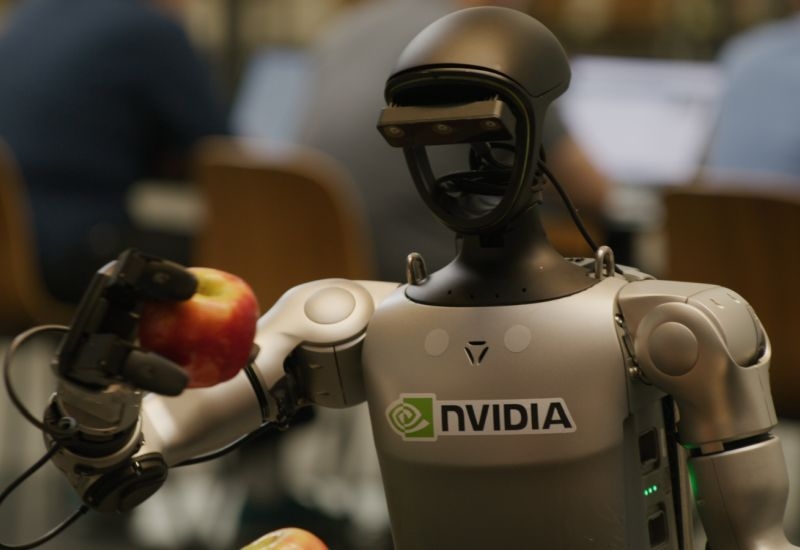
Nvidia currently dominates the AI chip market for humanoid robots, holding a 61% share as of 2025. However, the landscape is shifting as automakers like Tesla and Xpeng, along with Qualcomm, introduce competitive alternatives.
Counterpoint Research forecasts that the global market for these AI accelerators will grow at an average annual rate of 144% through 2030. Total shipments are expected to reach 1.1 million units by the end of that period.
In 2025, Tesla held a 5% market share, while Intel, Qualcomm, and Xpeng collectively accounted for 2%. Notably, 32% of humanoid robots operated without specialized AI accelerators during that year.
Qualcomm is positioning its hardware as a more cost-effective and energy-efficient alternative to traditional GPUs. The industry is moving toward a mix of computing architectures, though GPUs will remain essential for advanced VLA and WAM models.
Competition is expected to intensify after 2027 as accelerators capable of handling AGI-class workloads enter mass production. New players like D-Robotics are also emerging through strategic partnerships with robotics firms.