

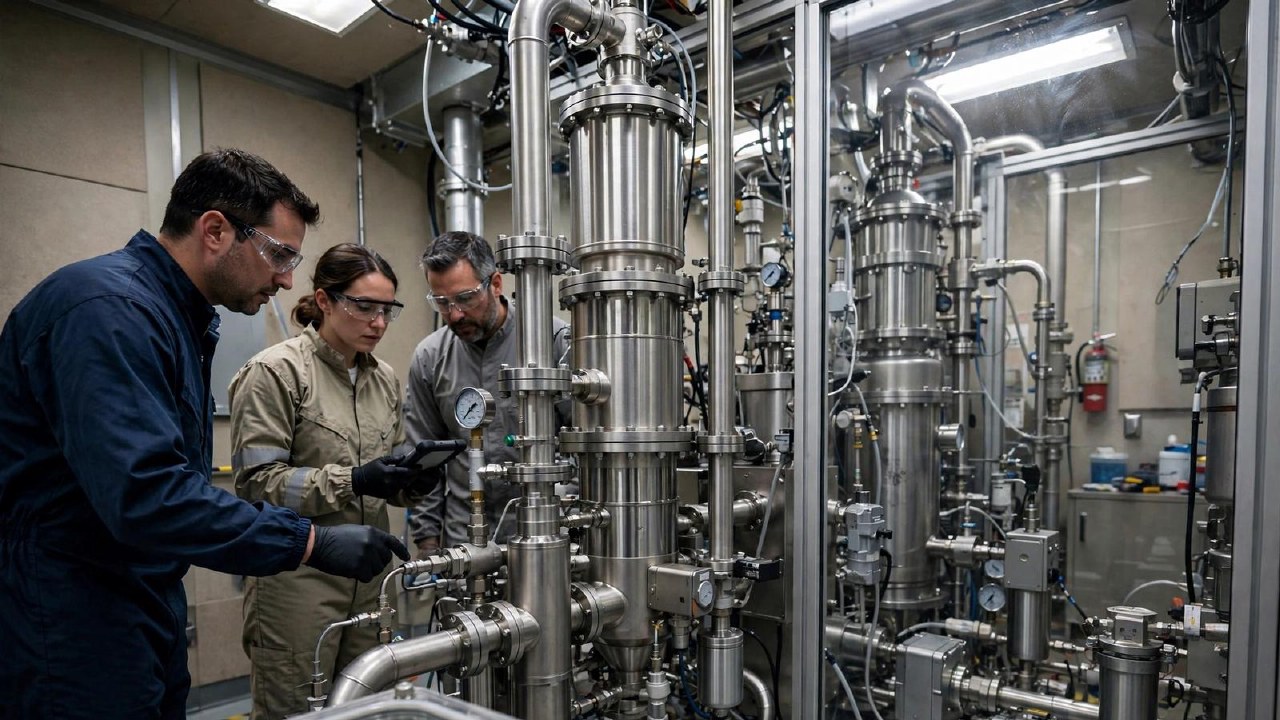
The American company Nusano has secured support from the US Department of Energy to develop a compact production system for High-Assay Low-Enriched Uranium (HALEU). The project is part of the Nuclear Energy Launch Pad initiative, which aims to accelerate the commercialization of advanced nuclear technologies.
Nusano’s proposed technology utilizes metallic uranium directly, bypassing the traditional process that relies on uranium hexafluoride (UF6). This method eliminates several intermediate chemical conversion steps and avoids the use of fluorine chemistry. A single module, occupying approximately 111 square meters, is designed to produce up to 5.9 tons of HALEU annually, with the first unit expected to launch in 2031.
HALEU is essential for next-generation reactors, including small modular designs, as it allows for longer operational cycles and higher energy density. According to US Department of Energy estimates, the national demand for HALEU could reach 50 tons per year by 2035, while current domestic production remains below 1 ton.
The partnership grants Nusano access to federal infrastructure, specialized procedures, and the expertise of national laboratories. The company plans to scale production through the deployment of multiple compact modules rather than constructing a single large-scale facility, aiming to meet the projected growth in market demand.


