

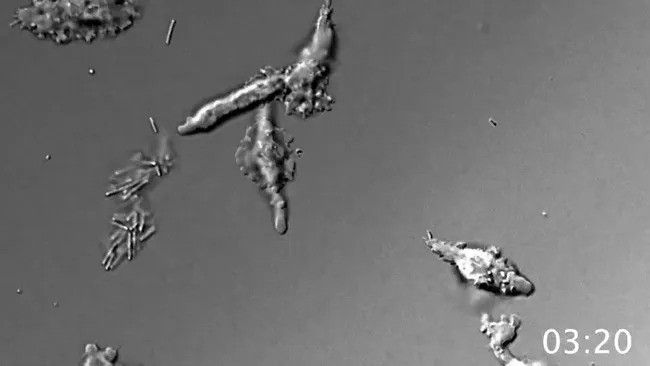
Scientists discovered a multicellular microorganism named Incendiamoeba cascadensis, or 'fire amoeba,' in a hot spring at Lassen Volcanic National Park in California. This eukaryote can reproduce at temperatures up to 63 degrees Celsius and maintain activity at 64 degrees Celsius.
The organism remains physiologically active at 66 degrees Celsius and can recover after exposure to 70 degrees Celsius, though it dies at 80 degrees Celsius. Previously, the maximum temperature for reproduction in multicellular eukaryotes was recorded at 60 degrees Celsius.
Research led by Beryl Rappaport from Syracuse University, published in the journal Cell on September 22, identified specific genes that protect DNA and assist in protein folding at high temperatures. These mechanisms share similarities with those found in thermophilic bacteria and archaea.
Genetic analysis suggests that Incendiamoeba cascadensis or its relatives may exist globally in geothermal environments. The discovery expands the known temperature range for complex life, potentially informing the search for extraterrestrial life on planets or moons with volcanic activity and liquid water.



