

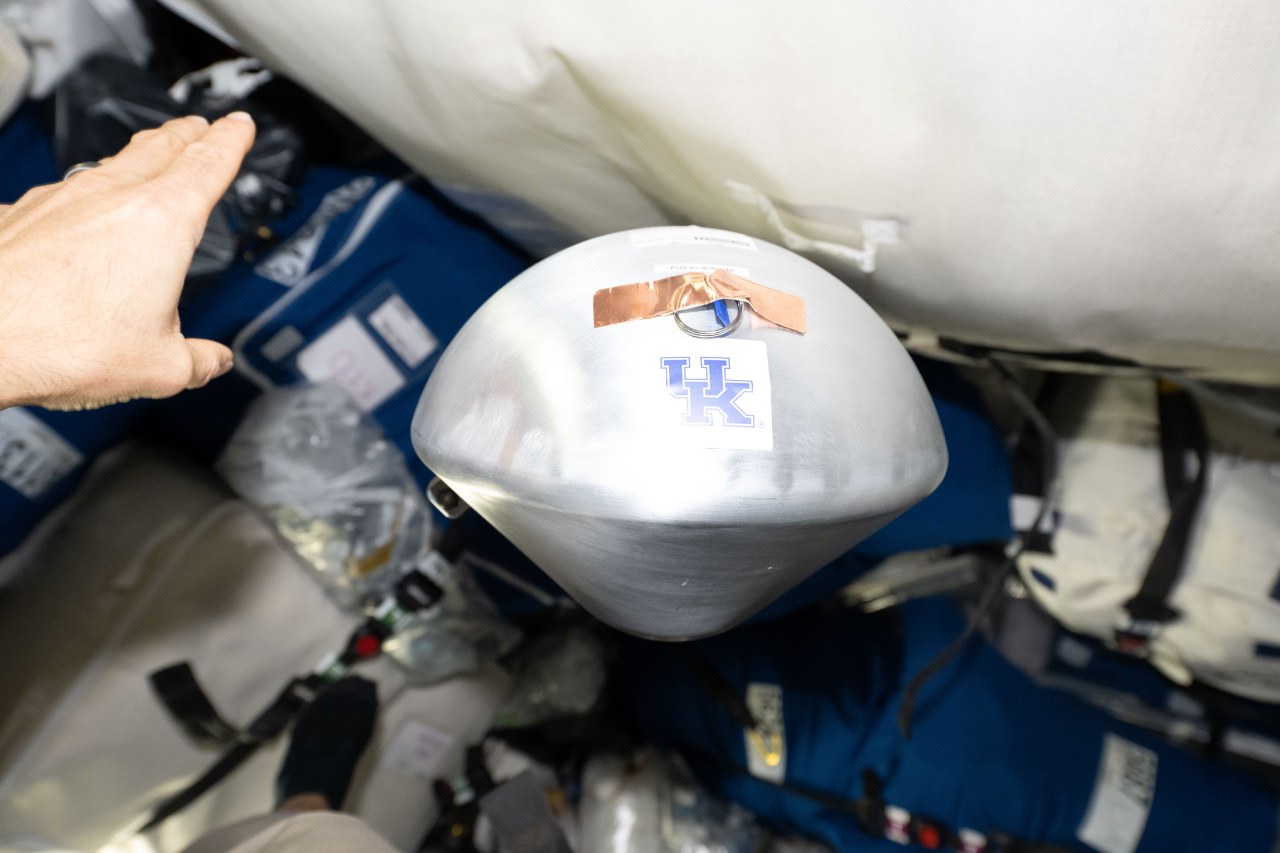
NASA has launched the Kentucky Reentry Probe Experiment (KREPE-3) to test next-generation thermal protection materials. The mission utilizes 12 experimental capsules packed inside a Northrop Grumman Cygnus XL cargo spacecraft, which departed the International Space Station on October 7.
The capsules contain various heat shield technologies, including 3D-printed materials from NASA’s Johnson Space Center and Oak Ridge National Laboratory. Other components include MERINO carbon and phenolic fiber layers, which are designed to be flexible and cost-effective for potential Mars missions.
The experiment also tests a dual-cone shape for validating computer models, an aeroshell design for the upcoming Dragonfly mission to Titan, and a deployable umbrella-like heat shield. Sensors within the capsules will record temperature, pressure, and magnetic field data during atmospheric re-entry.
This collaborative project involves the University of Kentucky, NASA’s EPSCoR program, and international partners like the University of Stuttgart. The mission aims to gather flight data by utilizing the final moments of the cargo spacecraft as it breaks apart in the atmosphere.



