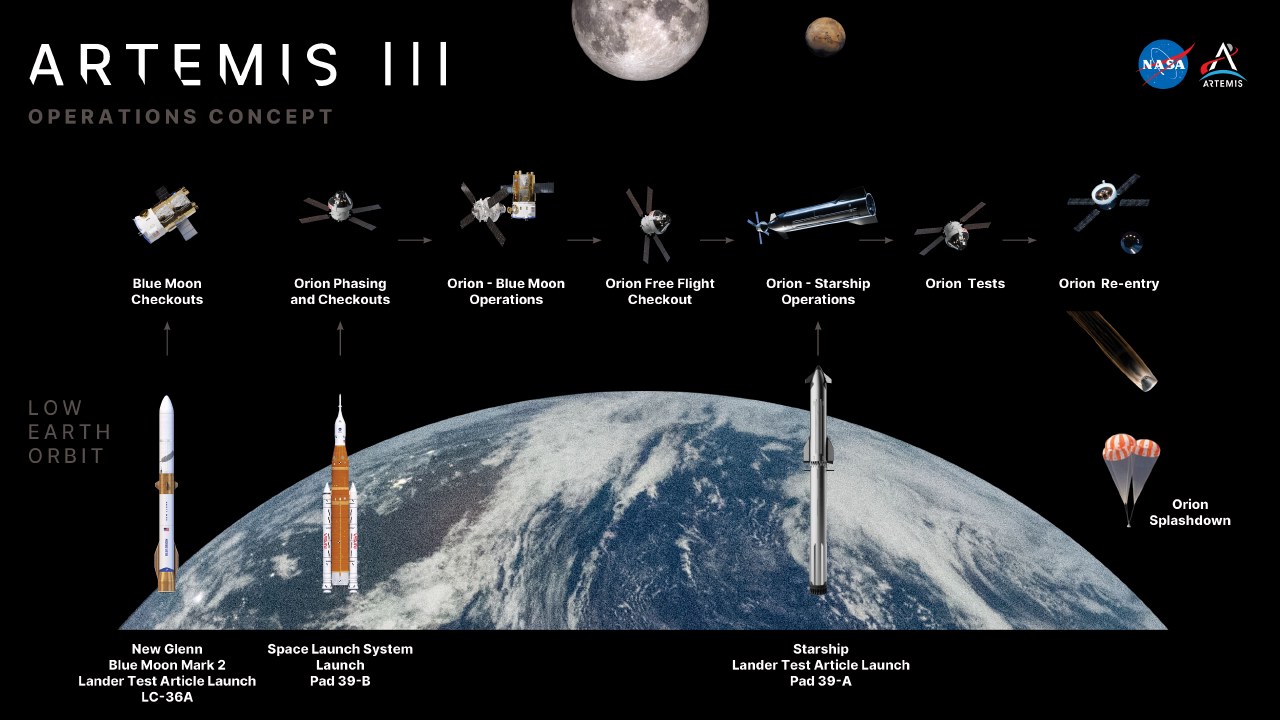
NASA has updated its strategy for the 2028 crewed lunar landing, shifting the rendezvous point for its Orion spacecraft and commercial landers from a near-rectilinear halo orbit to new configurations. SpaceX and Blue Origin are now both participating in the Artemis III mission demonstration in low Earth orbit, with no specific lunar landing missions currently assigned to either provider.
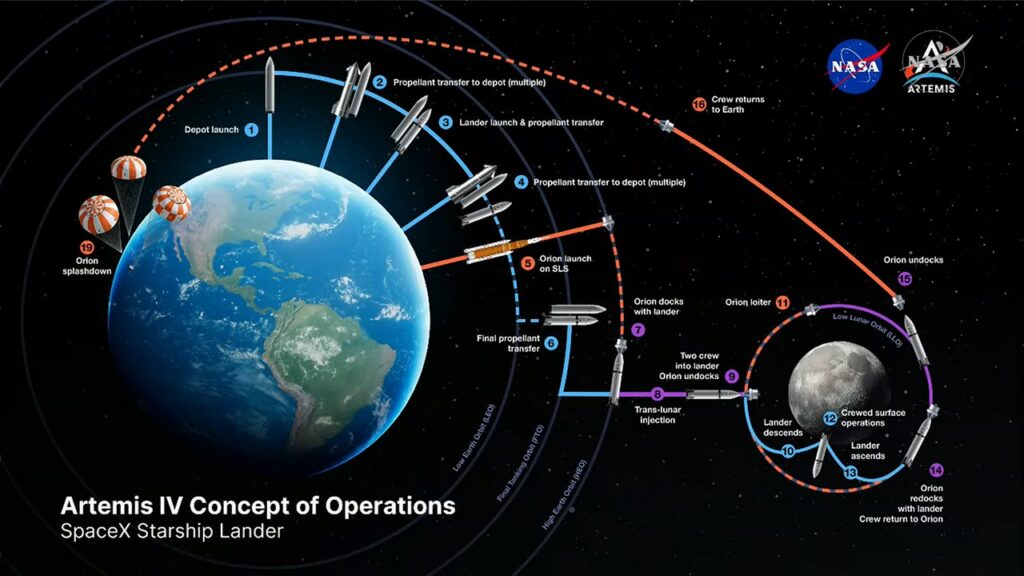
SpaceX will utilize a propellant aggregation method in low Earth orbit, where multiple Starship tankers will fuel a depot ship to support the Starship Human Landing System. The lander will then dock with Orion in Earth orbit before performing a trans-lunar injection to reach the Moon. The company is adding two crew cabin demonstrations to its development milestones.
Blue Origin plans to use three transfer stages for its Blue Moon Mark 2 Alpha lander, moving away from immediate propellant transfer. This configuration will target an elliptical polar orbit around the Moon to facilitate faster returns to Orion. The company is incorporating new human-in-the-loop testing and hardware readiness milestones into its program.
Before crewed missions, both companies must complete uncrewed demonstration flights. NASA will certify all lander systems to ensure safety. Initial surface missions will include two approximately two-hour long moonwalks for sample collection and testing of Axiom Space spacesuits.