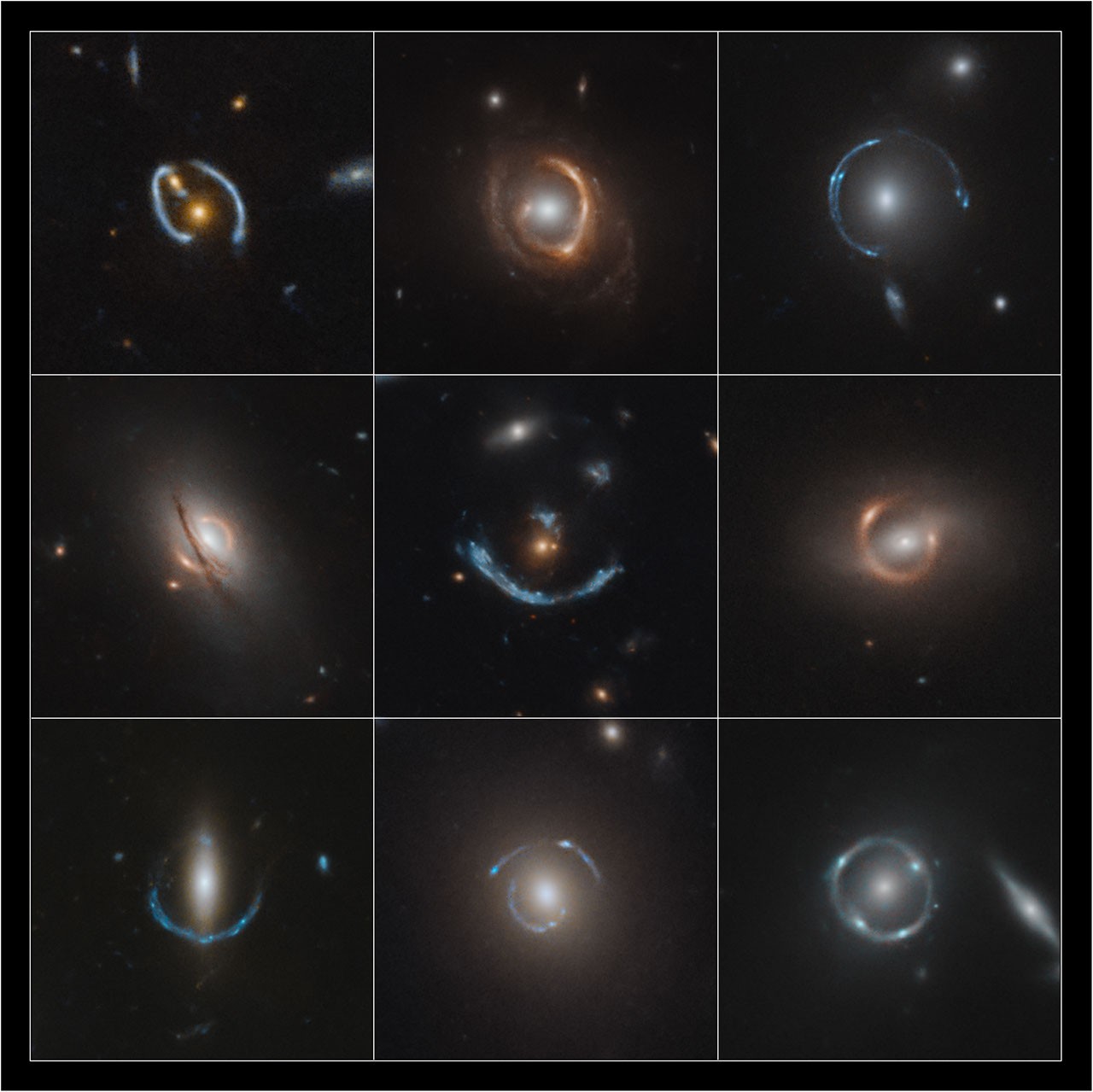
NASA is using data from the Hubble Space Telescope to prepare for upcoming observations by the Nancy Grace Roman Space Telescope, which launched in August 2026. Researchers are analyzing gravitational lenses to study galaxy evolution and dark matter distribution.
Hubble captures high-resolution images in visible and ultraviolet light, while the Roman telescope is designed for infrared observations with a significantly wider field of view. The two observatories will collaborate to identify and analyze gravitational lensing phenomena.
Scientists aim to detect small clumps of dark matter by identifying imperfections in lensed galaxy arcs. These clumps are expected to range from one million to one billion solar masses, compared to the 1.3 trillion solar masses of the Milky Way galaxy halo.
The research team is developing tools to automate the search for similar lensing structures in future data from the Roman telescope. Initial detection of these lenses was conducted using the Dark Energy Spectroscopic Instrument at Kitt Peak.