

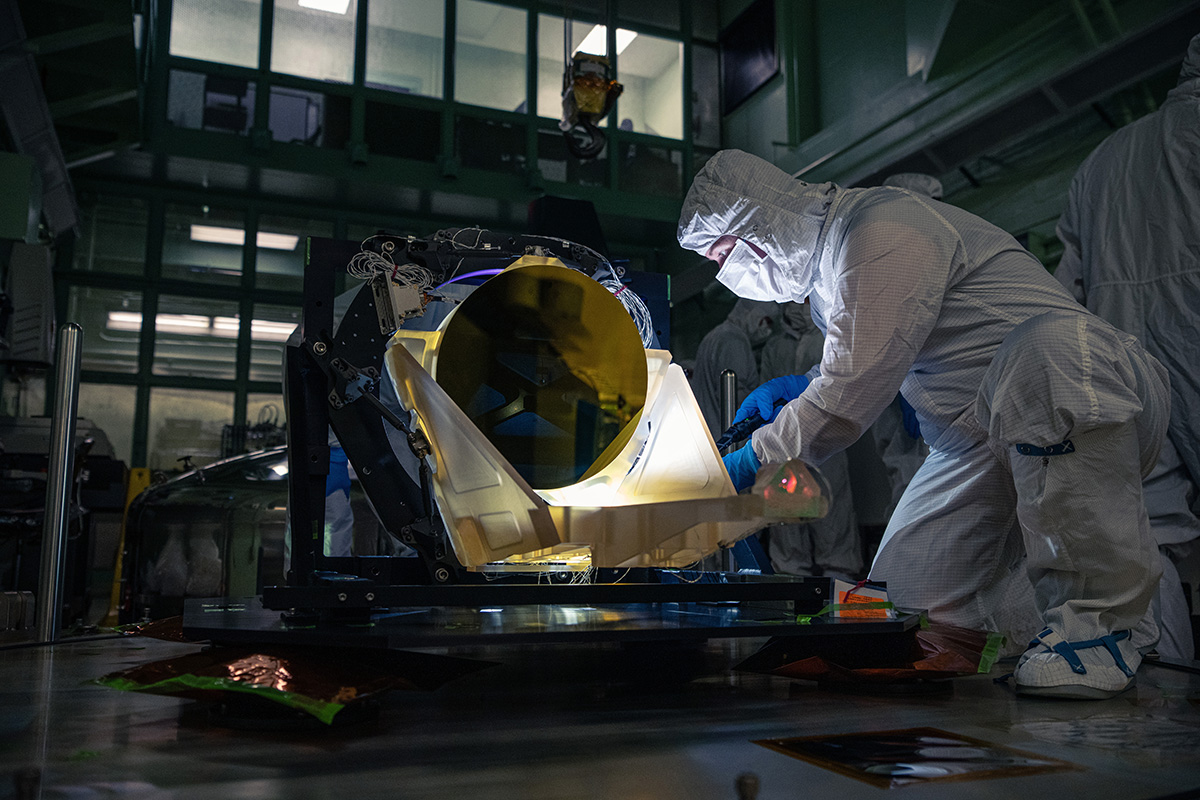
NASA has initiated the development of a new all-glass telescope for the Laser Interferometer Space Antenna (LISA) mission. The agency selected L3Harris Technologies to design, assemble, and integrate this Engineering Test Unit, which serves as a final step before the production of flight-ready hardware.
The LISA mission, led by the European Space Agency, is scheduled for launch in the mid-2030s. The observatory will consist of three satellites in an Earth-following orbit, forming a triangular array with sides measuring 1.6 million miles, or 2.5 million kilometers. Each spacecraft will carry two telescopes using infrared lasers to detect gravitational waves.
The telescopes are constructed from Zerodur, an amber-colored ceramic-glass composite chosen for its thermal stability. L3Harris previously delivered a prototype in 2024, followed by a metal structural model in June 2024. This new unit represents the final pre-flight hardware before delivery to the European Space Agency.
NASA’s contributions to the mission extend beyond telescopes. The agency is providing laser systems, charge management devices for the onboard gold-platinum proof masses, and scientific data analysis. These components will enable the detection of gravitational waves, which are smaller than the width of a helium atom.



