

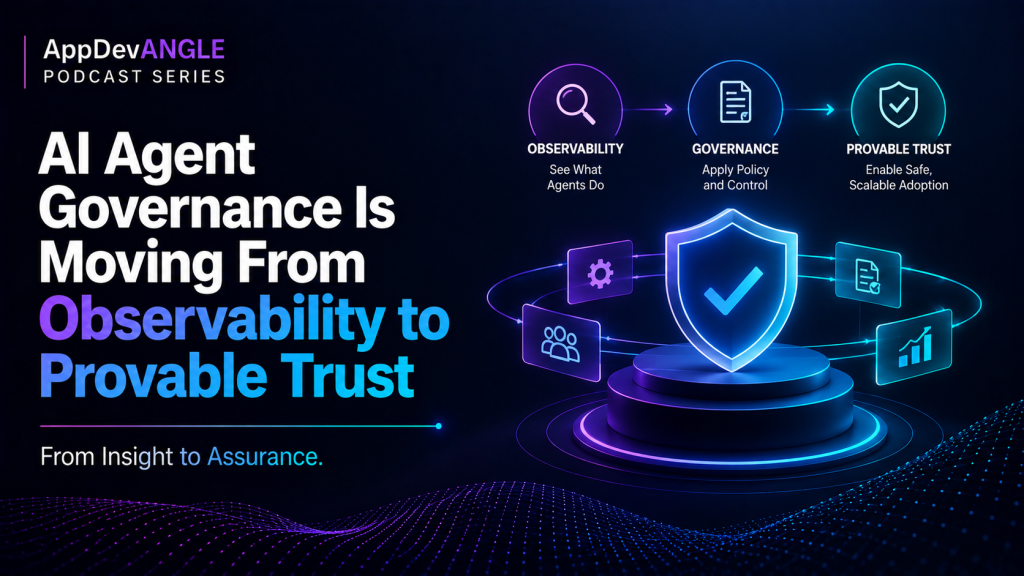
As autonomous AI agents transition from experimental tools to production systems, enterprises face new challenges in governance. Organizations must move beyond simple observability to implement provable control, ensuring they can verify why an agent was authorized to perform a specific action and whether that authority remained intact during machine-to-machine interactions.
Traditional access models based on human identity are insufficient for agentic systems where authority shifts rapidly across APIs and subagents. Experts suggest that governance must become contextual, considering the task, environment, and delegation chain. One executive noted that a single engineering organization had already created approximately 8,000 agents, highlighting the risk of rapid proliferation.
To ensure trust, companies are exploring cryptographic evidence to record decisions and authorization results, making any tampering detectable. This approach aims to replace conventional logging with independent verification. Such measures are critical for regulated industries, where 47% of organizations operate in mixed environments and 11% deploy AI in air-gapped infrastructure.
Achieving sovereignty in AI governance requires a multi-layered architecture rather than a single vendor solution. By combining open-weight models, customer-controlled compute infrastructure, and gateway-based policy enforcement, enterprises can maintain control over their workflows. This framework integrates policy definition, enforcement, and evidence into a unified security function.



