

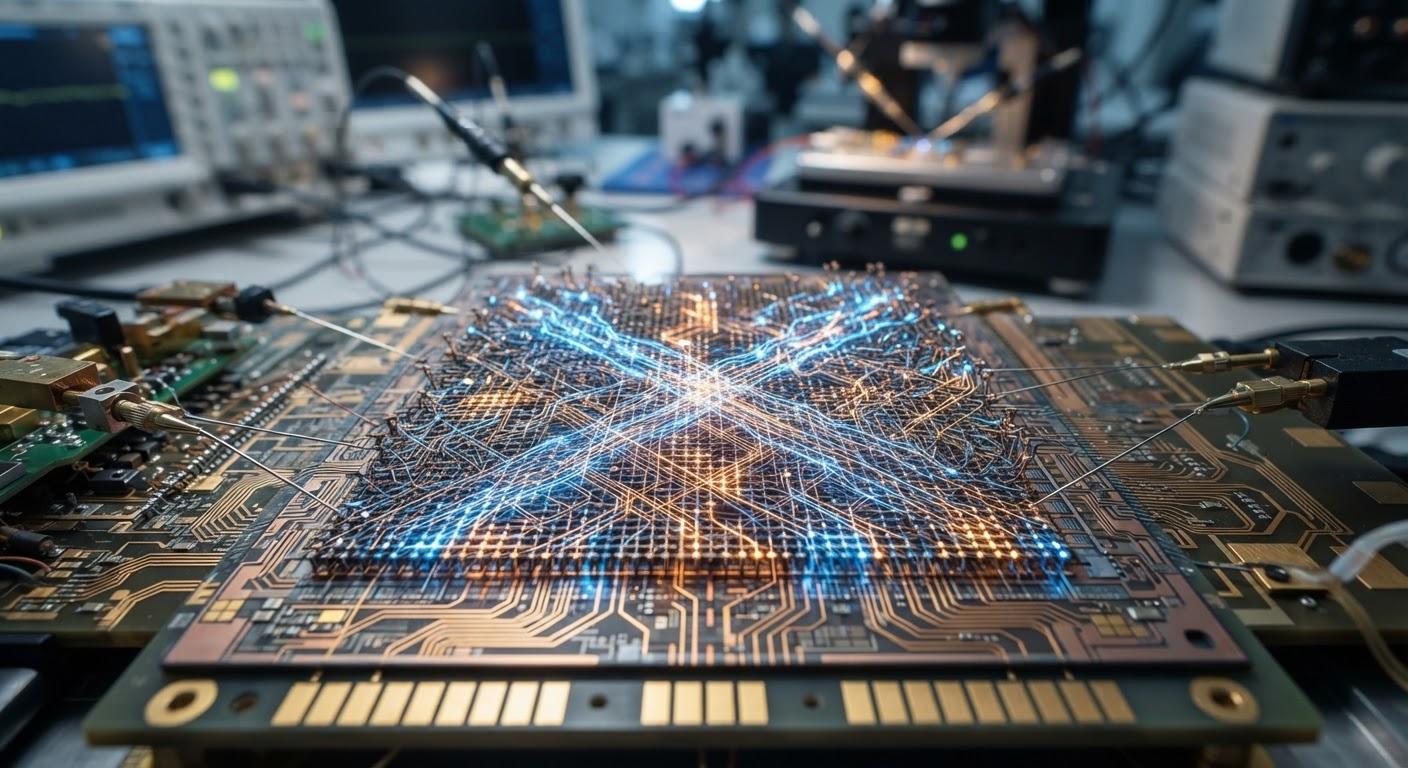
Researchers at MIPT have developed a new memristor design that mimics biological synapses. This component allows for simultaneous data processing and storage, which is essential for neuromorphic processor architectures that emulate the human brain.
Previous versions of the device struggled with data retention, keeping information for only a few seconds due to defects at the semiconductor interface. The team addressed this by replacing metal electrodes with semiconductor ones and optimizing the hafnium and zirconium film thickness.
The new design enables two operational modes: a fast-learning mode and an archival mode for long-term storage. These improvements extended data retention from a few seconds to nearly 12 days, while also increasing the device's rewrite cycle capacity by approximately 20 times.
By integrating computation and memory within the same elements, these memristors aim to reduce power consumption and increase processing speeds in artificial intelligence systems. This approach brings computing closer to the functional principles of neural networks.


