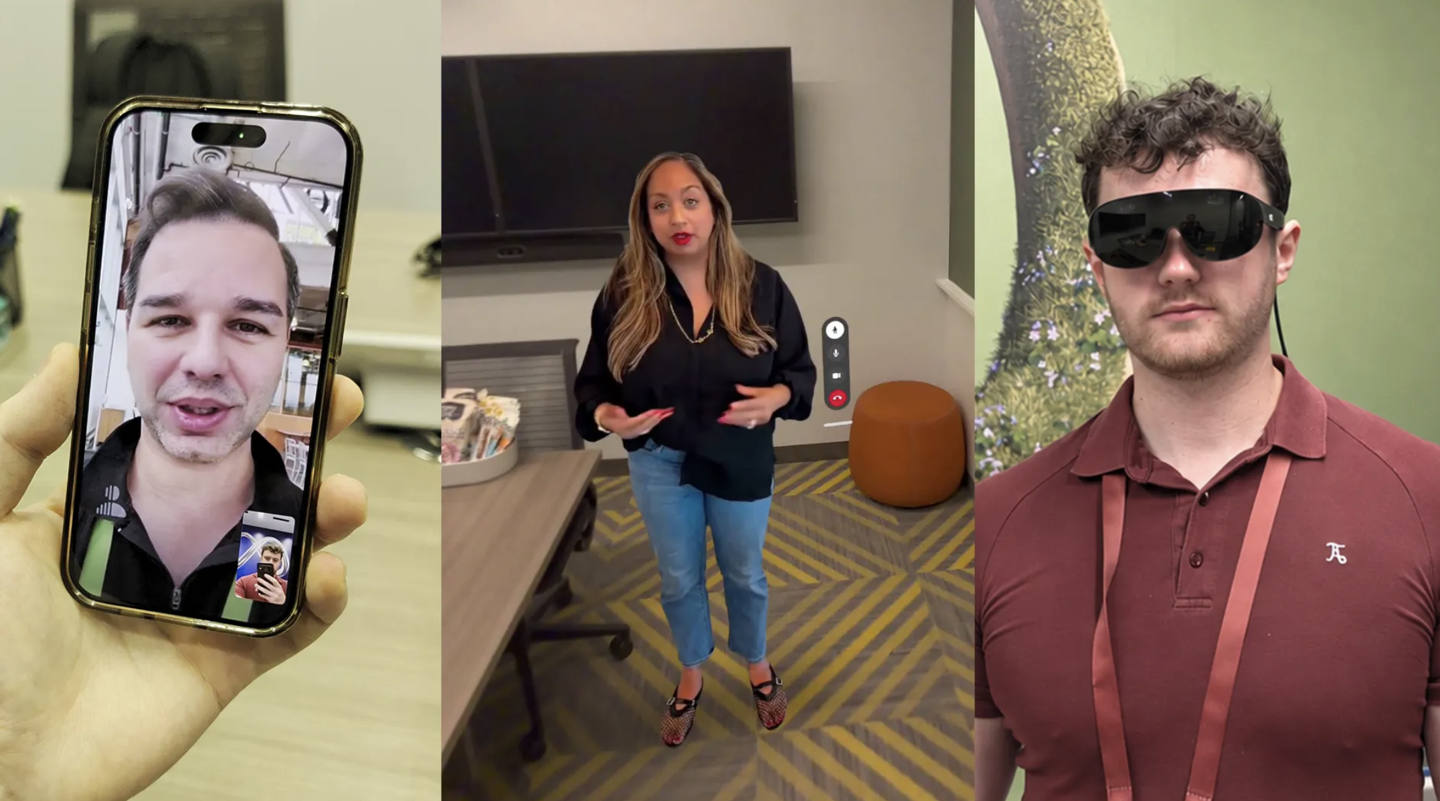
Meta is introducing its new Hologram feature this autumn for Ray-Ban Meta smart glasses and Quest headsets. The technology utilizes generative AI to create photorealistic avatars that resemble the user, marking a shift from the company's previous cartoon-style avatars.
To set up a Hologram, users must use the Meta AI mobile app to record their head movements, facial expressions, and speech. The system processes this data on servers to build a model that captures the user's appearance and clothing. The entire creation process takes only a few minutes.
On Ray-Ban Meta glasses, the feature generates a 2D video stream for WhatsApp calls. It uses a diffusion model running on Meta servers that interprets audio input from the glasses' microphones to animate facial expressions in real time, replacing the standard camera feed.
For Quest headsets, the Hologram appears as a 3D avatar. Users can view these avatars in a window or switch to a full-body mode where the virtual representation appears in near-life size. Meta notes that the technology is still being refined to address issues with proportions, eye detail, and avatar distortion during side-tilting.