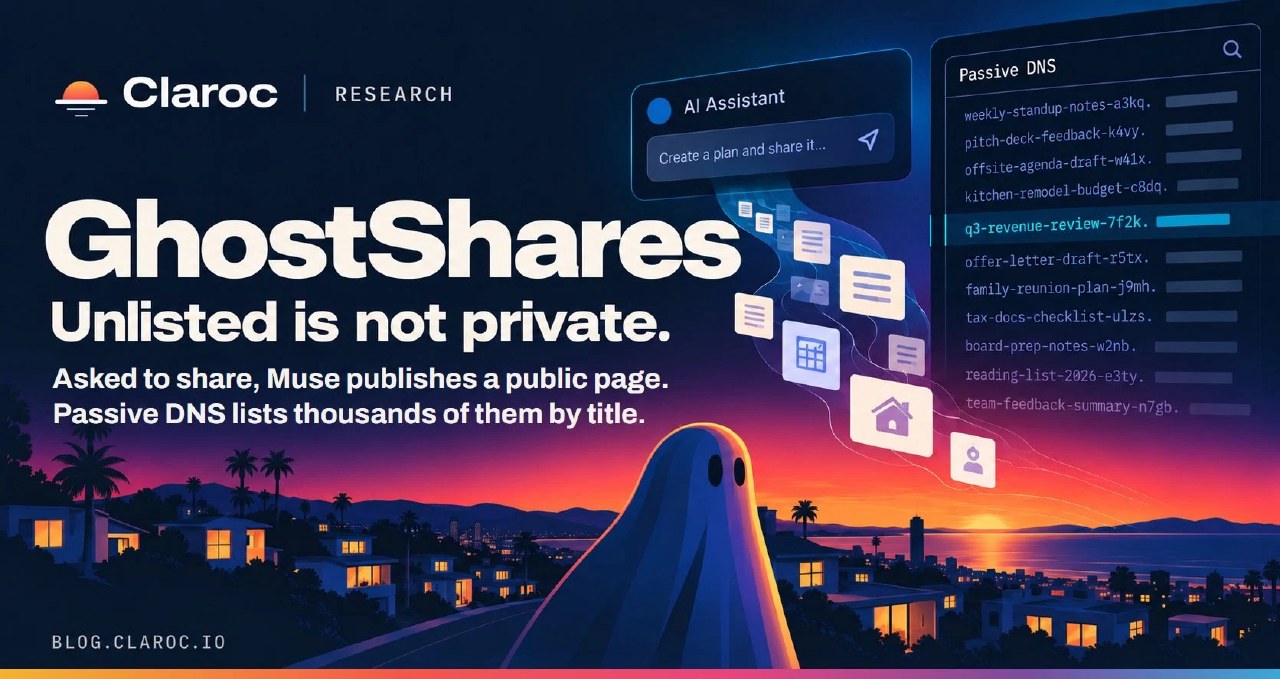
Security researchers from Claroc identified a privacy vulnerability in the Muse AI assistant by Meta. By analyzing passive DNS records, the team discovered over 6,800 public links to shared chat sessions. These links were hosted under the cf.metaaiusercontent.com domain, which included chat titles within the subdomains.
The exposed pages contained sensitive data, including corporate financial documents, loan applications, bank fraud alerts, and internal meeting preparations. These links did not require a Meta account for access. The issue stemmed from the inclusion of chat titles in the URL, which were subsequently indexed by passive DNS services.
Claroc reported the findings to Meta on October 8 via the company's bug bounty program. Meta responded by temporarily disabling the sharing feature to investigate the issue and evaluate potential improvements. By October 20, the researchers confirmed that the previously accessible pages were no longer reachable.
Despite the fix, the researchers noted that the domain names and chat titles remain in historical DNS databases. Claroc clarified that their investigation was limited to specific domain patterns and that there is no evidence of malicious exploitation of the exposed data prior to their discovery.