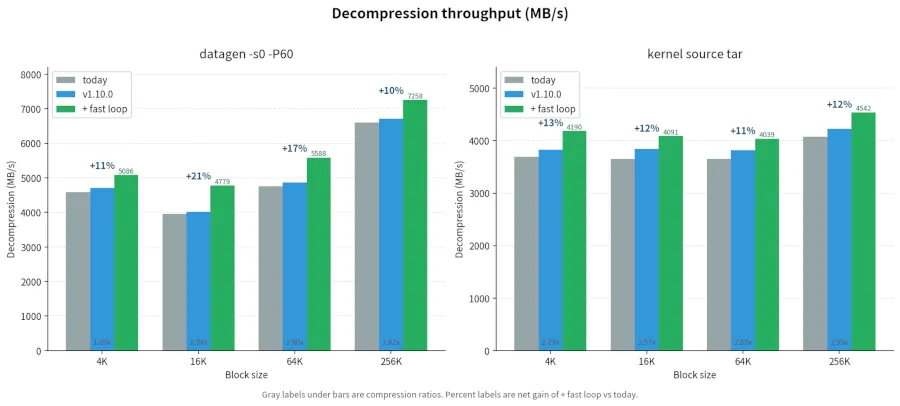
The Linux kernel is undergoing a major update to its LZ4 compression algorithm implementation. Led by Samsung engineer Michal Wilczynski, the initiative aims to replace the current kernel-specific fork with a direct synchronization of the upstream LZ4 source code. The existing kernel version has remained largely unchanged since 2017-2018, missing years of upstream improvements.
This transition simplifies maintenance by allowing the kernel to adopt future upstream optimizations and bug fixes directly. The change addresses long-standing compatibility and synchronization issues associated with maintaining a separate codebase. LZ4 is a critical component in the Linux ecosystem, utilized in file systems, memory compression, boot images, and container environments.
Performance testing on the EROFS read-only file system shows significant gains. With 4KB data blocks, read throughput increased by approximately 11%, while 64KB blocks saw improvements of up to 14%. Additional internal benchmarks indicate that the new implementation can achieve performance gains of up to 21% in specific scenarios.
Beyond LZ4, the Linux kernel is also advancing other compression technologies, including ongoing performance enhancements for Zstd. As data volumes grow and demands from AI, cloud computing, and container deployments increase, these optimizations remain a priority for the kernel development team to ensure efficient system performance.