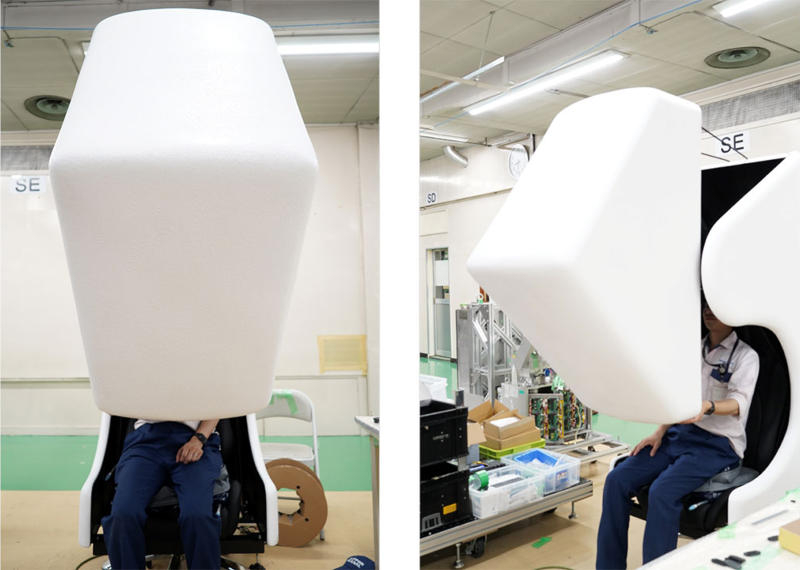
Shogo Fukushima, an engineer at Kyushu University in Japan, has developed a virtual reality chair designed to eliminate the need for head-mounted displays, which often cause neck strain. The system uses an array of micromirrors to direct separate images to each eye, creating a stereoscopic 3D effect without a headset.
The chair features an optical module and a gyroscope that tracks body movements in real time, allowing the 3D image to rotate along with the user. This setup provides a panoramic view similar to a cinema experience while maintaining a compact footprint comparable to a standard chair.
Current limitations include significant light absorption by the mirror plates, necessitating a high-brightness display, and a restricted field of view. Researchers are exploring the use of additional flat mirrors to potentially increase the effective screen area by six times.
The development team is currently seeking industrial partners. Potential applications for the technology include integration into vehicles, interactive museum exhibits, remote control systems for construction machinery, and robotics for disaster relief operations.