

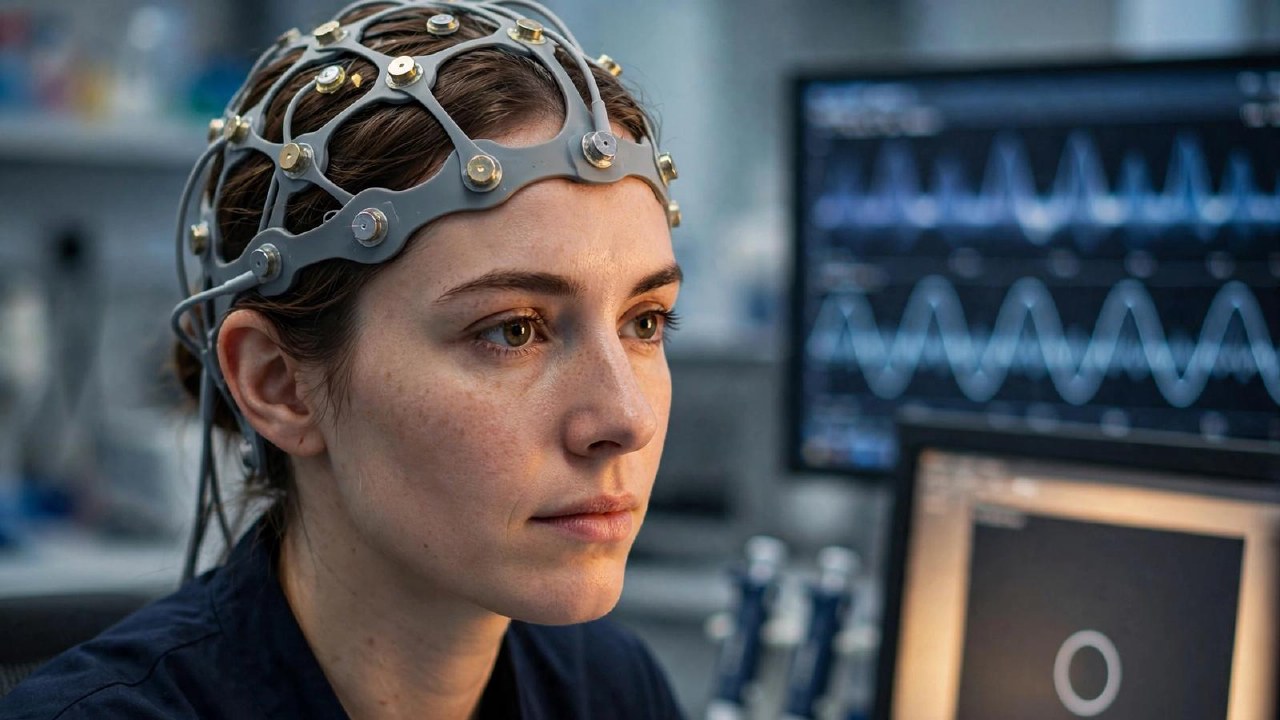
Researchers from KAIST and Microsoft Research Asia have developed the Neural Value Alignment (NVA) brain-computer interface. This system utilizes electroencephalography (EEG) to detect specific brain activity patterns when an AI model makes an error. By interpreting these signals, the algorithm can adjust its behavior without requiring verbal feedback from the user.
The team focused on two types of predictive errors: reward prediction error (RPE), which involves a mismatch in the goal or result, and state prediction error (SPE), which relates to the method or intermediate steps taken. Experiments demonstrated that the human brain generates distinct wave patterns for each error type, which deep learning models can reliably classify.
The NVA system employs an AI-synergy algorithm that uses decoded neural signals to refine decision-making processes. Upon detecting an RPE signal, the model re-evaluates its goal, whereas an SPE signal triggers a correction of the method. Currently, the technology has been demonstrated only in simulated environments.
Practical implementation faces limitations, as EEG technology requires electrodes and remains sensitive to environmental noise, restricting its use to laboratory settings. Future applications could potentially include domestic robots, industrial manipulators, autonomous vehicles, and medical devices for individuals with speech or motor impairments.

