

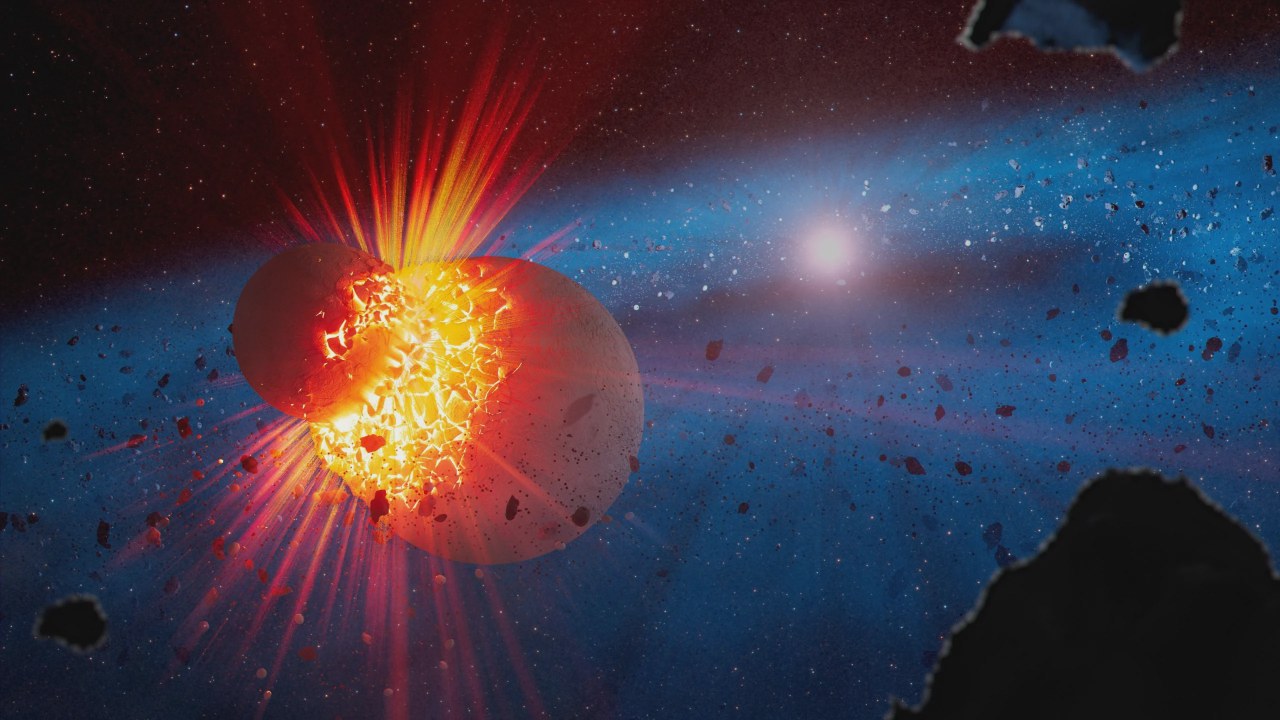
Astronomers used the James Webb Space Telescope (JWST) to study rare young stellar systems, identifying dust signatures left by planetary collisions. The research team analyzed data from 21 extreme debris disks, including 16 observations from JWST and 5 from the retired Spitzer Space Telescope, forming the largest sample of its kind to date.
The study identified two distinct types of debris disks based on their mineral composition. About one-third of the disks are silica-rich, which researchers suggest results from high-energy collisions between Mars-sized bodies. These impacts vaporize rock, creating silica-rich debris similar to volcanic glass found on Earth.
The remaining two-thirds of the samples are silica-poor, likely originating from lower-energy, glancing collisions between Moon-sized objects. These disks contain minerals such as forsterite, which is found in green sand on Hawaiian beaches. Only about 1% of young stars exhibit these extreme debris disk characteristics.
By analyzing mid-infrared spectral data, scientists can now infer the intensity and scale of planetary collisions that occurred in distant solar systems. This research provides a fossil record of planetary formation, offering insights into the early history of Earth and the Moon, which are believed to have formed following a massive impact.



