

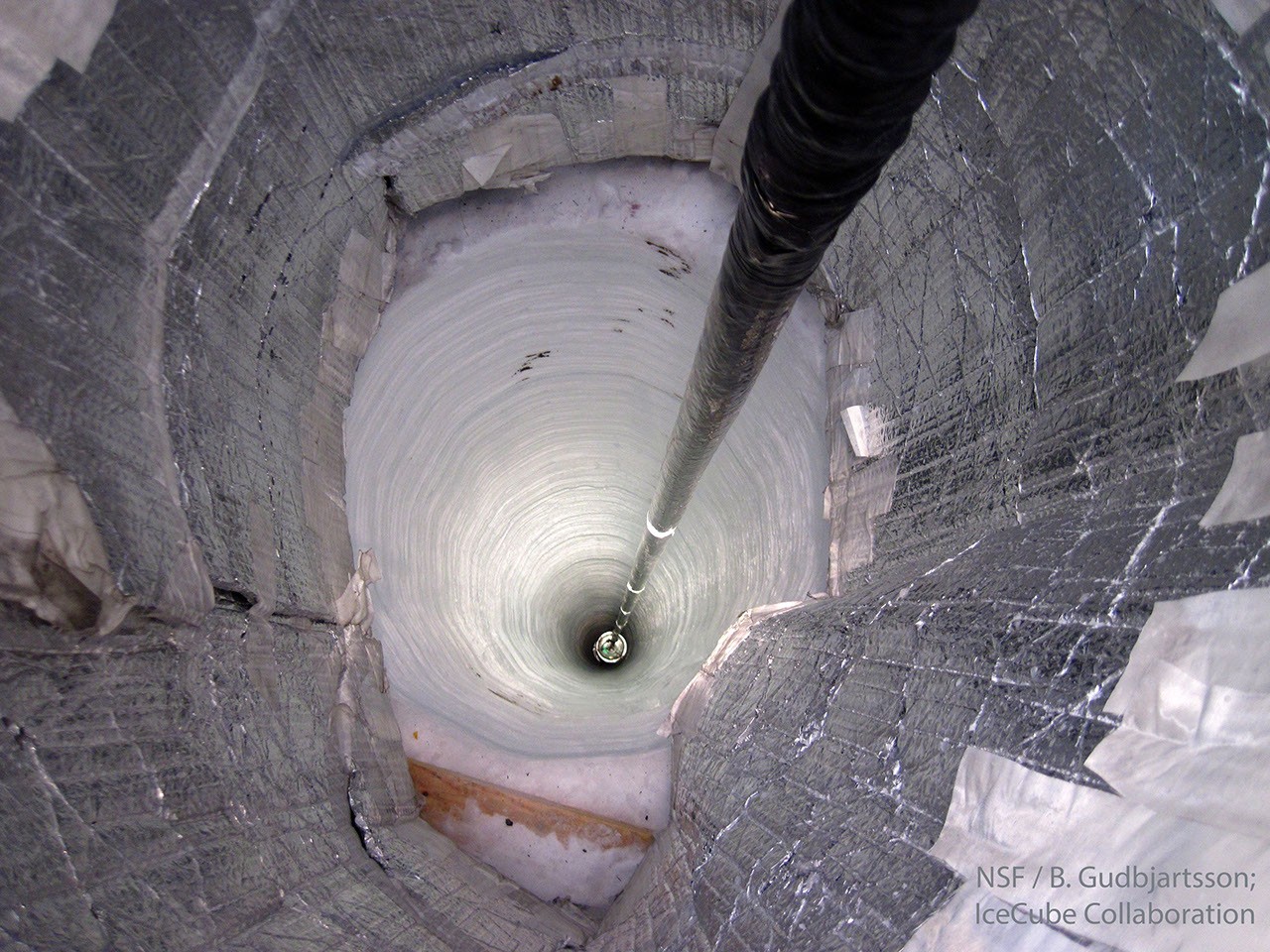
The IceCube Neutrino Observatory utilizes nearly 100 holes drilled near the South Pole to conduct astronomical research. Scientists lower strings equipped with light sensors into these vertical shafts, which subsequently refreeze, embedding the equipment within the ice.
These sensors detect blue light generated by high-energy neutrinos interacting with ice molecules. The facility is currently recognized as the largest neutrino detector in existence. A founding leader of the project was recently awarded the Nobel Prize in Physics for these scientific contributions.



