

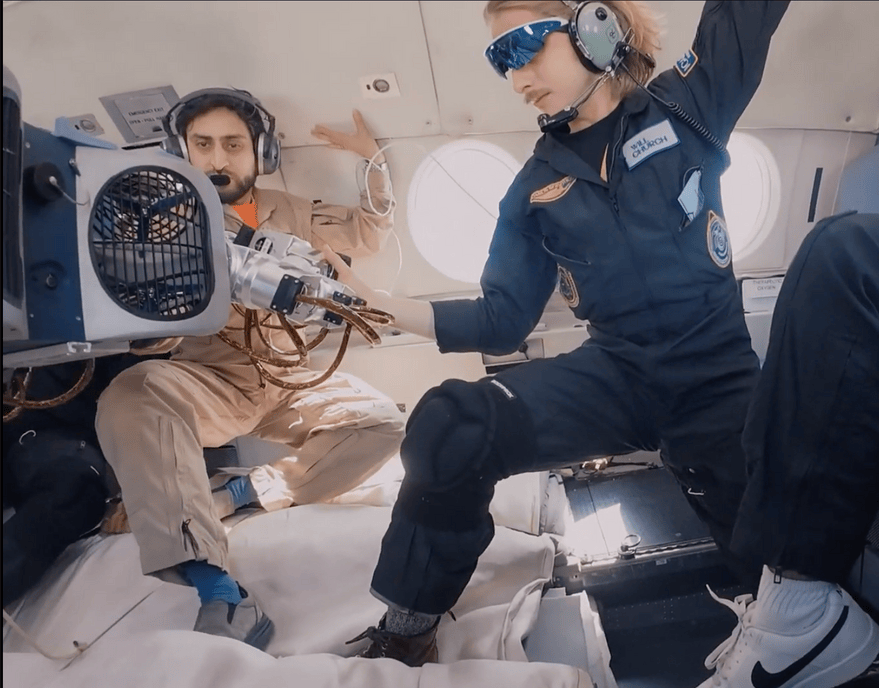
Icarus Robotics, a startup based in New York, is developing mobile robots for space missions. The company recently conducted testing of its Joy platform, which features manipulators designed for high dexterity. These tests were a necessary preparation for a planned demonstration on the International Space Station scheduled for 2027.
The testing campaign took place in Canada, where the team performed four parabolic flights. This provided 22 minutes of microgravity operations to evaluate the robot's flight controller, sensor suite, and manipulation capabilities. During these flights, the company also practiced crew coordination, scheduling, and safety procedures with the assistance of Canadian astronaut Chris Hadfield.
Icarus Robotics opted for Canadian facilities due to a lack of available parabolic flight operators in the United States. While U.S. firms previously utilized the services of Florida-based Zero-G, those flights are currently paused. Other entities, such as Starlab Space, are also looking to international locations like Switzerland and Liechtenstein for microgravity testing.
The industry is seeing new efforts to address the domestic infrastructure gap. Startup Mu-g Technologies is preparing for parabolic flights using a Dassault Falcon 50 jet. Additionally, NASA awarded a contract to Denmar Technical Services in June to modify a 737-700 aircraft for microgravity testing to support the hardware needs of future commercial space stations.



