

Researchers from Lancaster University investigated an anonymous 1871 Nature report claiming a geomagnetic storm caused a 16-minute delay for a 10:05 PM train in Exeter on October 18, 1841. The study found this account inaccurate because the railway line between Exeter and Plymouth did not open until May 30, 1846.
The team identified the likely author of the 1871 report as electrical engineer Nathaniel John Holmes. Archival evidence suggests Holmes had professional ties to Nature editor Sir Norman Lockyer, who published the article. The researchers were unable to locate the original source material for the claims mentioned in the publication.
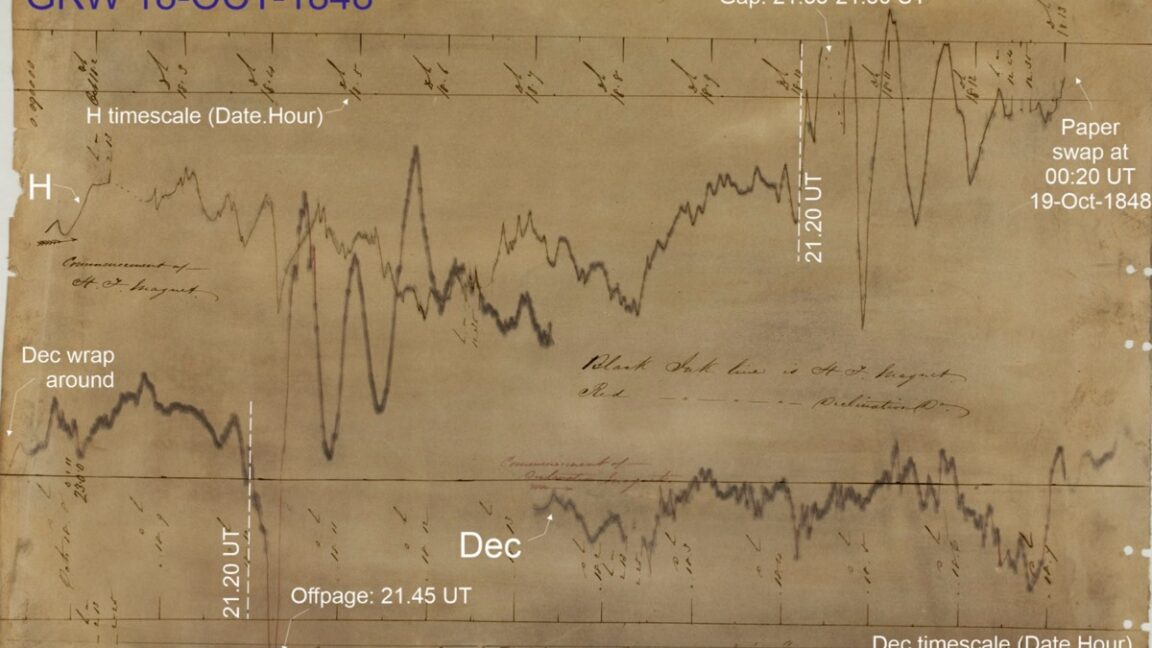
Analysis of magnetograms from the Greenwich observatory showed no unusual magnetic activity in October 1841. However, records confirm strong geomagnetic storms occurred around October 18, 1848. Railway timetables from that period confirm the existence of a 10:05 PM express train, suggesting the 1841 date was a typographical error.
Following the debunking of the 1841 incident, the earliest documented case of space weather impacting technology is now identified as a March 1847 event. During this time, spontaneous electrical currents disrupted telegraph systems on the Midland Railway while a brilliant aurora was visible across the British Isles.



