

A repair technician recently restored two server-grade DDR5 memory modules valued at $16 000. The kit consisted of two ECC sticks, one with 128GB and the other with 256GB of DRAM capacity. The owner sent the hardware for repair due to physical damage that rendered the components non-functional.
The technician utilized a Unified DDR Flasher Main Board equipped with an RDIMM extension to diagnose the modules. Initial inspection of the first stick showed no obvious defects, allowing for a successful repair via flux application and hot air reflow of the solder joints.
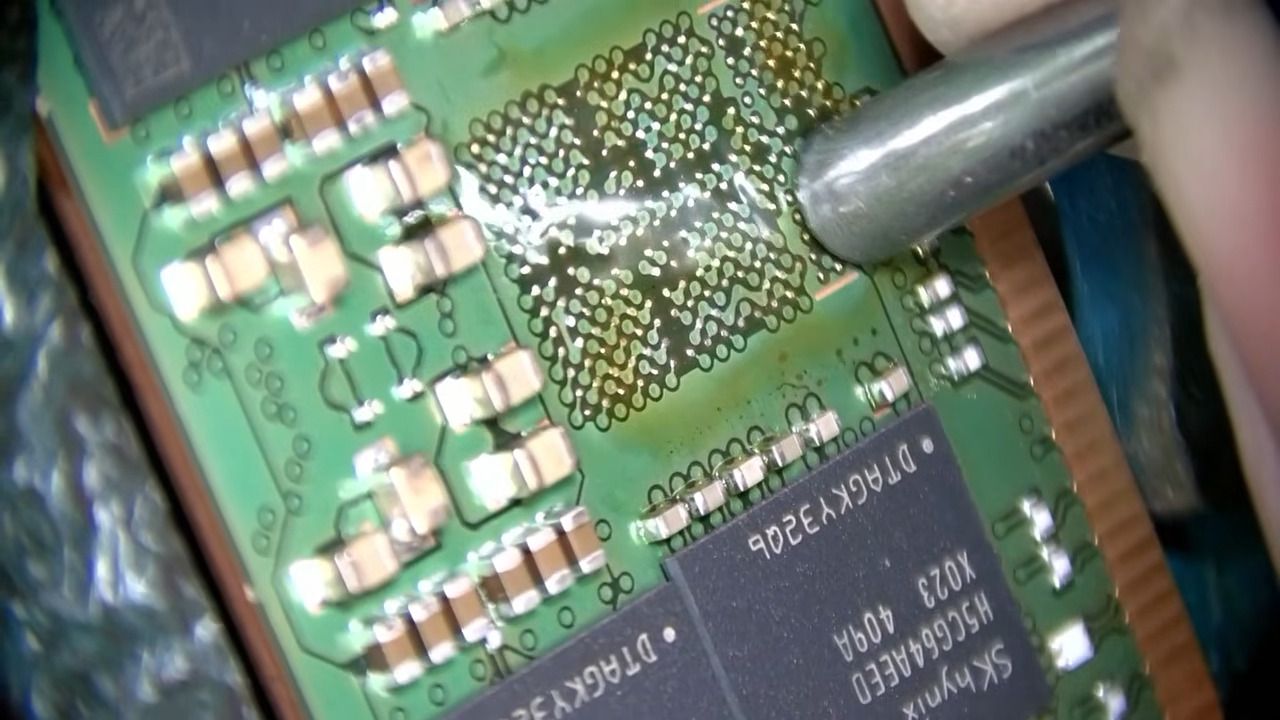
The second module presented more significant challenges, showing no signs of power or thermal activity. Diagnostic efforts revealed a short circuit, which was resolved by replacing a capacitor and repairing the damaged PCB edge. The final step involved replacing the faulty PMIC chip to restore full functionality.
This case highlights a shift in the economics of hardware maintenance. While repairing standard memory modules was previously cost-prohibitive compared to replacement, the high price of specialized server-grade components now makes professional repair a viable and cost-effective business model.



