

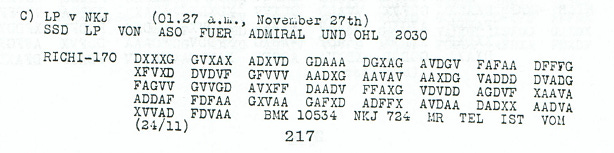
The GPT-6 Astra model has successfully decrypted a German military radio message from World War I, originally sent on November 27, 1918. The message, which used the ADFGVX cipher system, describes the arrival of a British cruiser in Sevastopol and the subsequent movement of an Allied fleet.
The decryption process involved using the keyword TRUPPENVERSCHIEBUNG, which translates to troop movement. This keyword was sourced from the book The History and Principles of German Military Ciphers, 1914–1918 by J. Rives Childs. The model applied the keyword to the 170-character ciphertext using column transposition and the ADFGVX substitution grid.
The model cross-referenced its findings with historical records from the British Royal Navy. These records confirm that the HMS Canterbury arrived in Sevastopol on November 24, 1918, followed by an Allied fleet on November 26, matching the details extracted from the decrypted telegram.
Astra noted a discrepancy regarding the keyword, as historical records suggest the term TRUPPENVERSCHIEBUNG was not in use until December 9, 1918. This timeline mismatch likely contributed to the message remaining undeciphered by researchers for over a century.
This experiment demonstrates the model's ability to integrate historical research, cryptographic reconstruction, and cross-source verification. The project is considered an independent AI experiment rather than a peer-reviewed academic study, highlighting potential tools for future archival research.



