

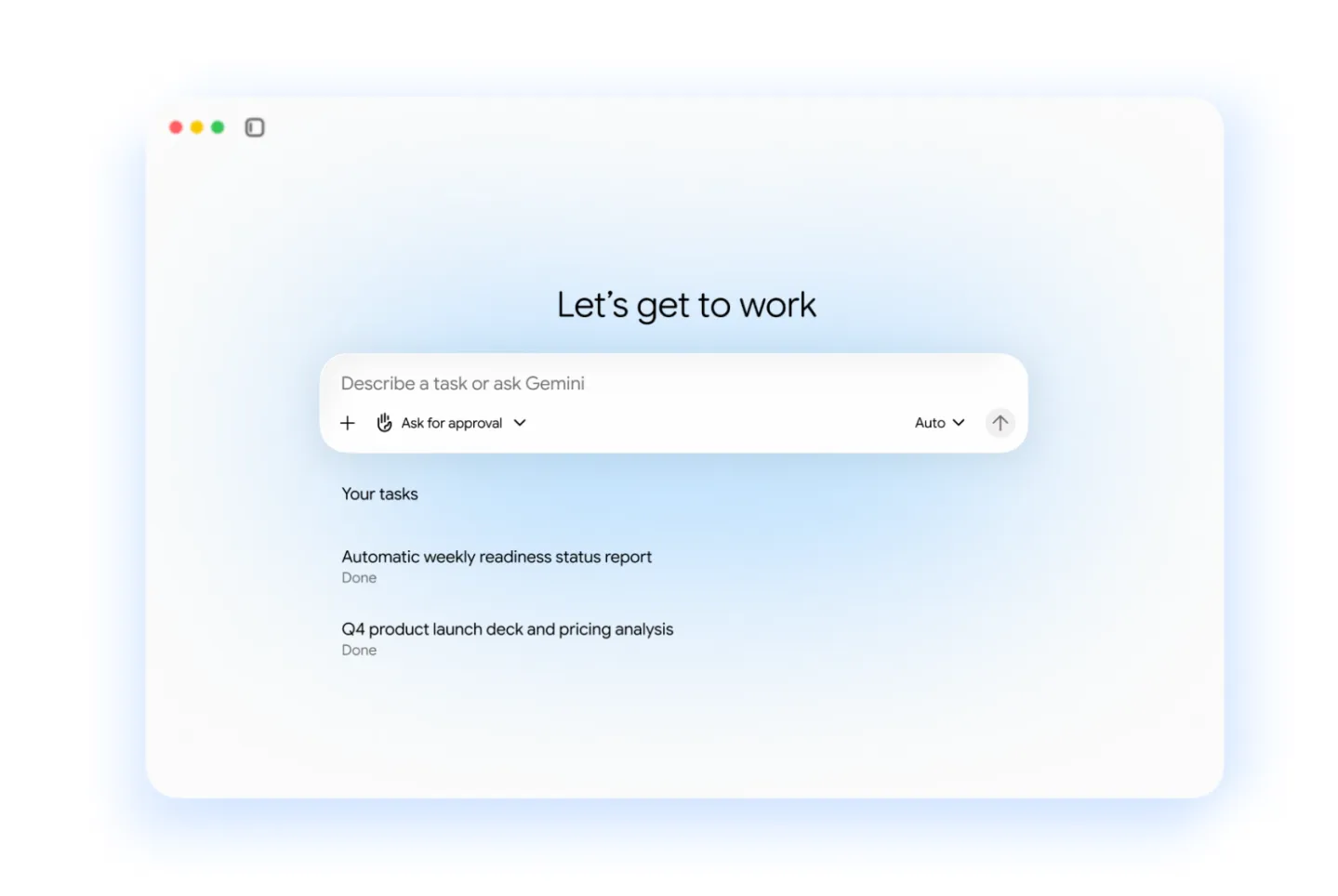
Google introduced Gemini Agent at the Gemini at Work 2026 event, positioning it as a universal work agent for enterprise users. Unlike traditional chatbots, this system is designed to autonomously plan tasks, utilize tools, and connect to corporate systems to deliver final results. The platform aims to transition AI from a simple assistant to a digital employee capable of executing complex workflows.
The agent integrates directly into the Google Workspace ecosystem, including Gmail, Docs, Sheets, and Drive. It functions by accepting high-level goals rather than step-by-step instructions. For instance, it can automatically compile project data and create presentations based on email requests. It also manages scheduling by analyzing team calendars and coordinating with external partners to reduce administrative overhead.
Gemini Agent utilizes a multi-agent architecture to decompose large tasks into sub-tasks that can be executed in parallel or sequence over extended periods. The system is model-agnostic, currently supporting Gemini and Claude models, with plans to integrate additional open-source and commercial options. It also features a four-layer memory system to accumulate organizational knowledge and improve efficiency over time.
Security and governance are central to the platform, offering identity verification, permission management, and audit capabilities. Companies can also manage AI resource costs through built-in orchestration tools. Google reports that 80 percent of its Cloud customers currently use its AI products, and 90 percent of Fortune 100 companies have deployed Gemini Enterprise services.



