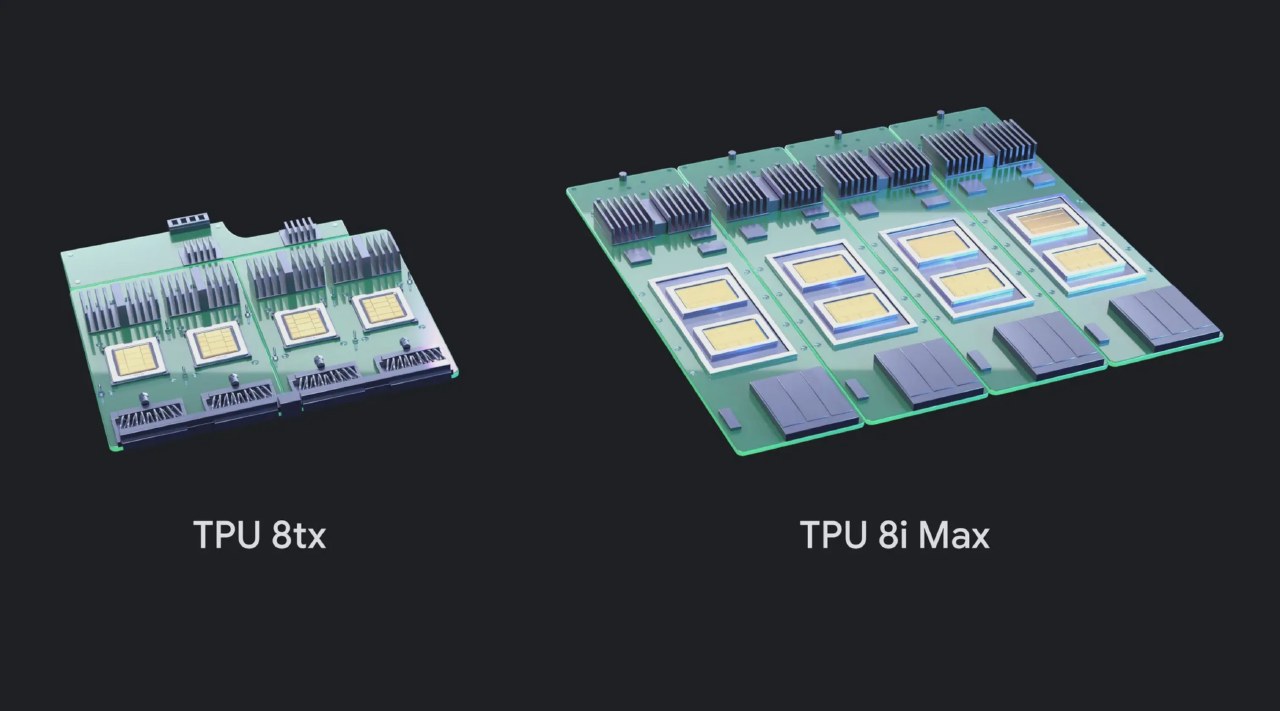
Google has expanded its eighth-generation TPU lineup by introducing two new specialized chips: the TPU 8tx and the TPU 8i Max. These additions aim to address specific enterprise requirements for data security and large-scale model performance, complementing the previously released TPU 8t and TPU 8i models.
The TPU 8tx is designed for sectors with strict privacy and security regulations, such as healthcare, finance, and government. It integrates confidential computing capabilities and works in tandem with AMD processors to encrypt model weights and sensitive information directly at the hardware level during processing.
The TPU 8i Max focuses on models requiring long context windows. By enhancing memory resources and computational power, it enables AI systems to process vast amounts of text or code in a single request. This is intended to improve performance in complex tasks like drug discovery and mathematical reasoning.
Amin Vahdat, head of Google AI infrastructure, stated that these chips are optimized derivatives of the existing eighth-generation architecture rather than entirely new designs. Google is prioritizing specialized hardware versions over a single general-purpose chip to better serve diverse customer needs.
The eighth-generation TPU family now consists of four models covering training, secure inference, low-latency inference, and long-context inference. Google offers these chips for rent via its cloud services, positioning them as a primary alternative to Nvidia GPUs for enterprise AI deployment.