Google has expanded its eighth-generation TPU lineup with two new models, TPU 8tx and TPU 8i Max, bringing the total to four systems released within a single year. These tensor processing units are designed for training and deploying neural networks, positioning the company as a direct competitor to Nvidia in the AI infrastructure market.
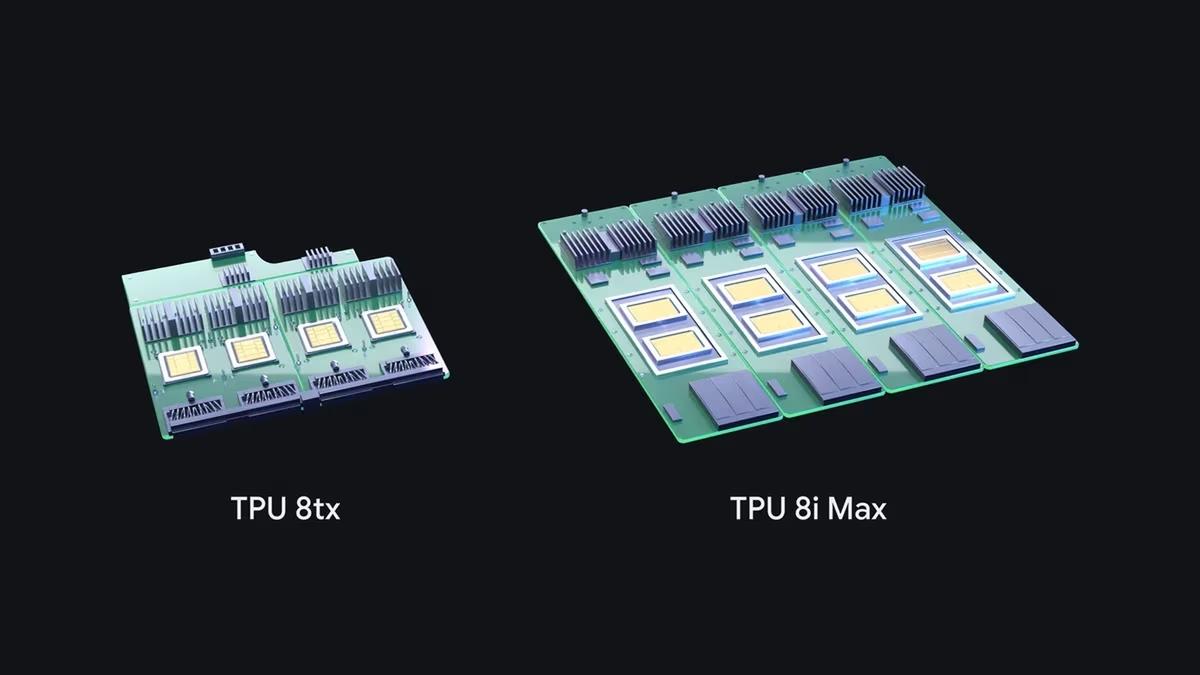
The TPU 8tx model is tailored for government and regulated sectors, featuring a hardware-based confidential computing layer. This architecture physically isolates data and model weights during operation, enabling secure training and agent deployment. Additionally, the updated network subsystem reduces latency by 50% compared to the standard version.
The TPU 8i Max combines two chips into a single module to double computing power, memory capacity, and bandwidth. This configuration is optimized for large-scale tasks, such as analyzing extensive codebases or processing long-duration video streams. The design allows for double the silicon density within standard server racks.
According to Amin Vahdat, Google's chief technologist for AI and infrastructure, the TPU ecosystem currently serves nearly 100 clients, including research labs, financial institutions, retailers, and universities. The company maintains a network of four design partners to advance its architecture, though pricing and delivery dates remain undisclosed.