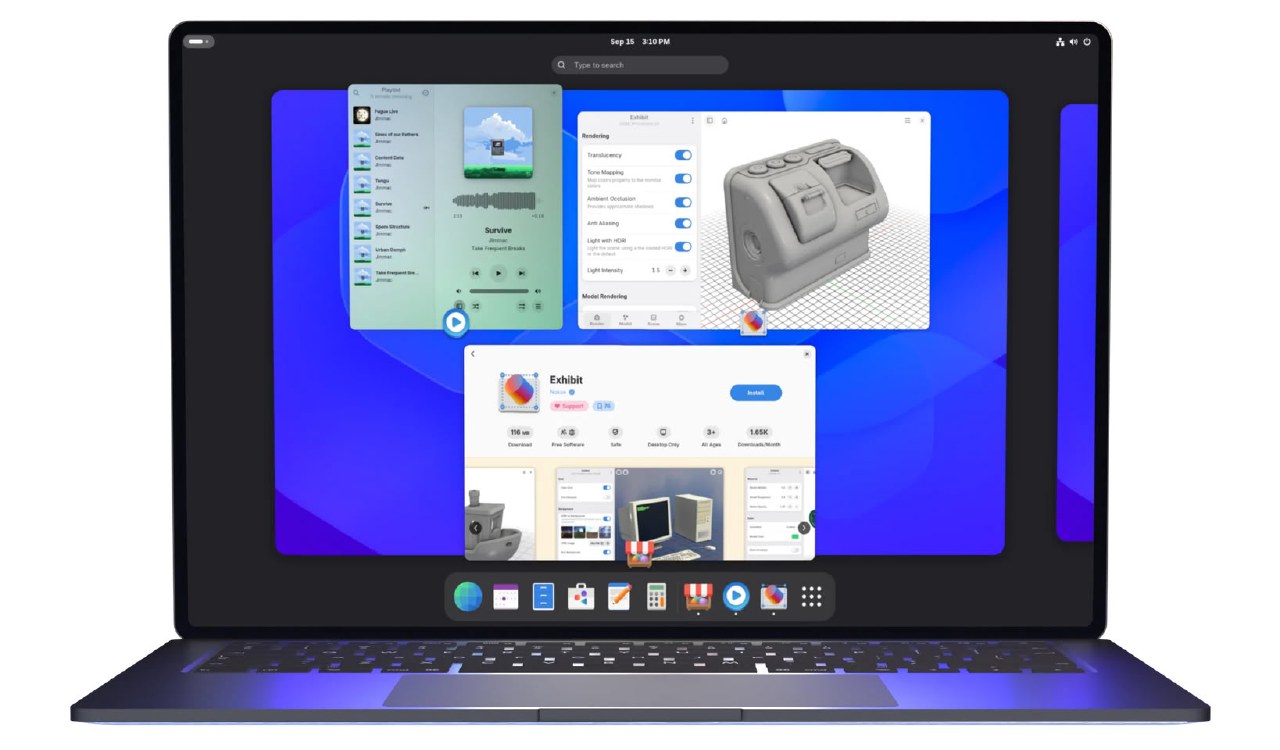
The GNOME project has officially released the GNOME 51 desktop environment. This major update follows months of development and community testing, focusing on deep refactoring of the underlying compositor and rendering pipeline to improve interaction fluidity.
The Mutter compositor received significant optimizations to address frame drops during high-frequency interactions. Developers improved scheduling logic and frame synchronization algorithms, which enhances performance for dynamic scaling, workspace transitions, and window dragging, particularly on high-refresh-rate monitors and multi-screen setups.
The system settings panel has been reorganized for better ergonomics, simplifying navigation for network, Bluetooth, and audio settings. The quick settings tray now includes expanded widgets, allowing users to perform adjustments without opening the full control center.
Core applications, including the Nautilus file manager, have been updated with rewritten background pipelines for faster file loading and indexing. Other components like the text editor and system monitor now follow the Libadwaita design language, improving support for dark mode, touch gestures, and keyboard shortcuts.
Major Linux distributions, including Fedora and Ubuntu, plan to integrate GNOME 51 into their upcoming autumn releases. This rollout aims to provide a more stable and responsive desktop experience for developers, enterprise users, and the broader Linux community.