

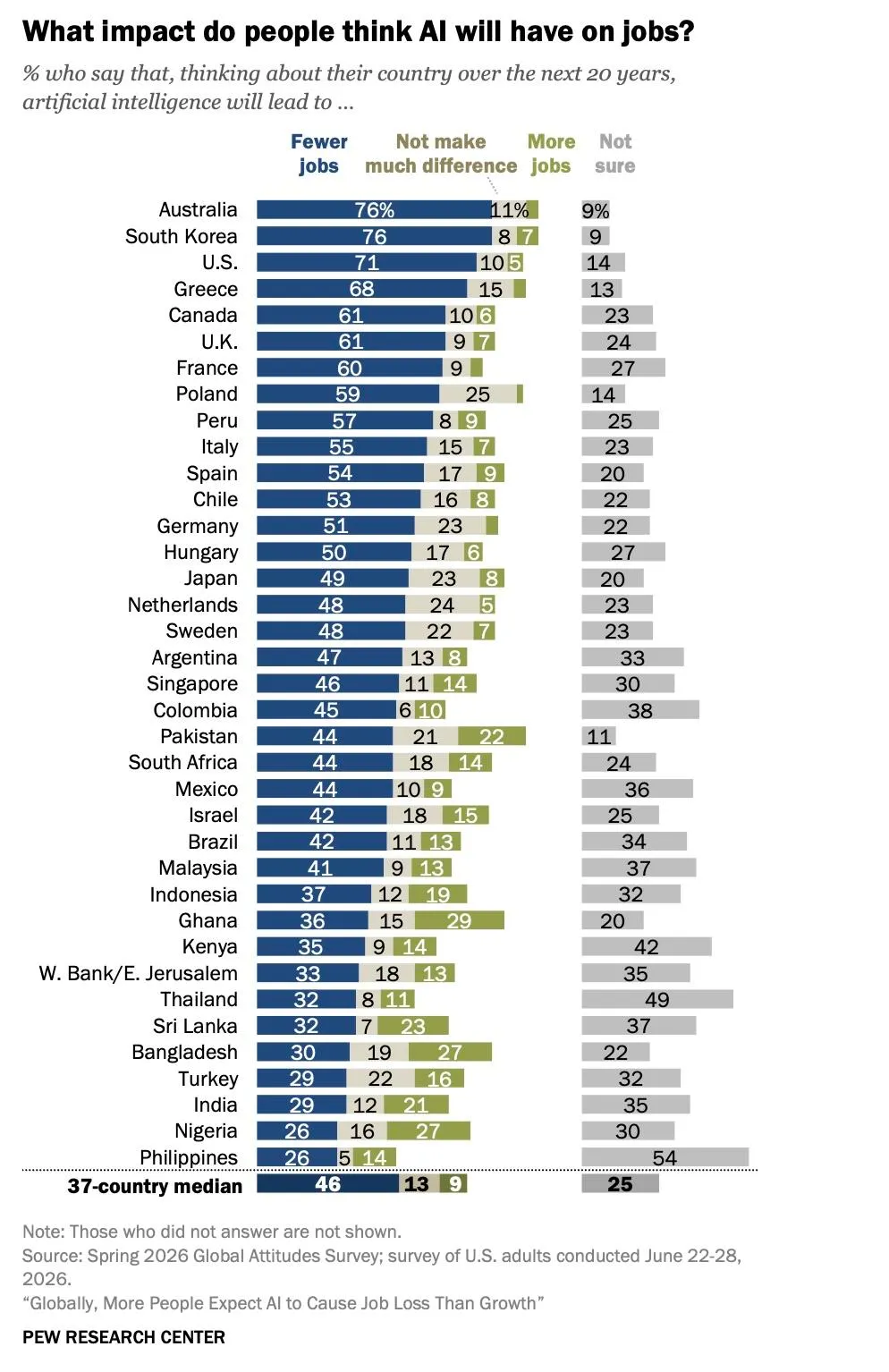
A global survey by the Pew Research Center, conducted between February 8 and May 13, 2026, covered 42,151 participants across 37 countries. The results indicate that in 34 of these nations, the majority of respondents believe AI will reduce the number of available jobs over the next 20 years.
Concerns are particularly high in developed economies. In Australia and South Korea, 76% of respondents anticipate job losses due to AI, while in the United States, this figure stands at 71%. These findings reflect broader anxieties regarding potential increases in wealth inequality driven by artificial intelligence.
The study highlights a complex public sentiment. While 37% of global respondents express primary concern regarding AI, 41% report feeling both worried and excited about its integration into daily life. Only 13% of participants stated they feel primarily excited about the technology.
Age plays a significant role in these perceptions. While older individuals are generally more concerned about AI's impact on daily life, younger adults aged 18 to 34 are increasingly anxious about their future employment prospects. In countries like Sweden, Poland, and Japan, this anxiety among the youth has risen over the past year.



