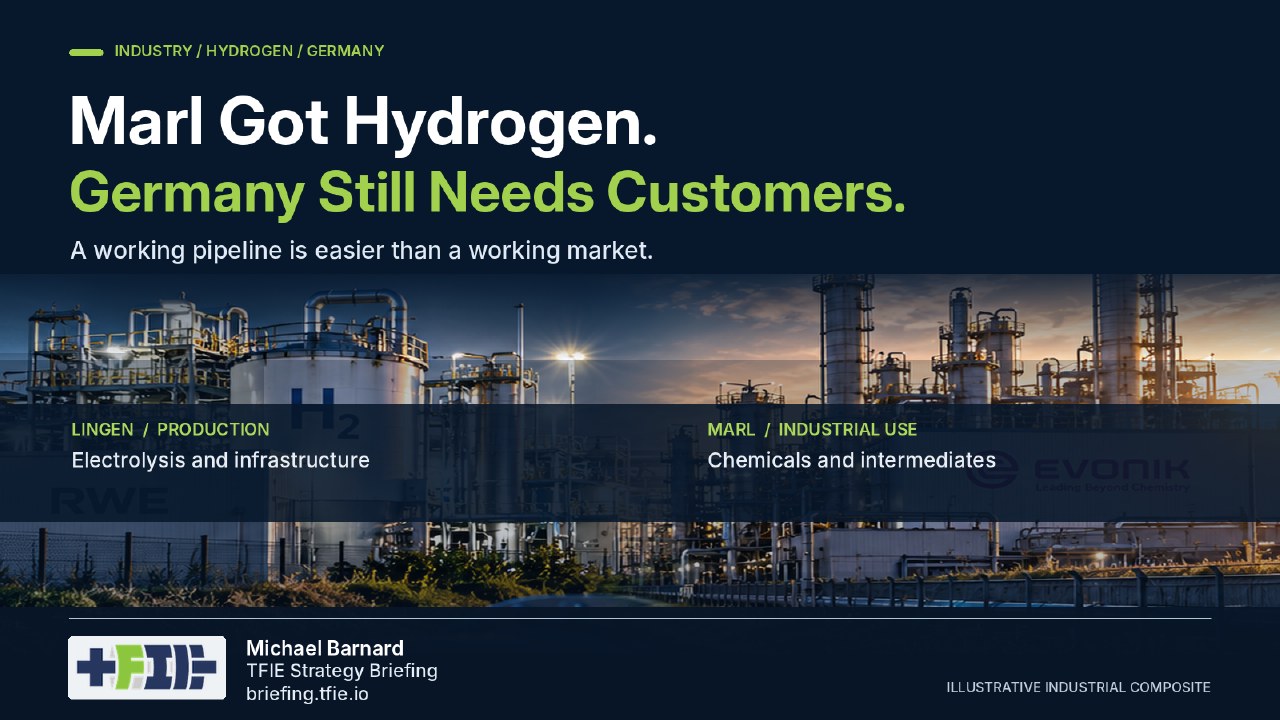
On August 4, 2026, the GET H2 consortium successfully delivered renewable hydrogen from Lingen to the Marl Chemical Park. The project utilized electrolyzers and converted natural gas pipelines to transport the gas over a distance of approximately 120 kilometers.
Germany has approved a hydrogen core network spanning 9,040 kilometers, with projected investment costs reaching €18.9 billion. Much of this infrastructure relies on repurposing existing natural gas pipelines, though these plans do not guarantee future commercial utilization.
Specific industrial demand remains a key challenge for the project's viability. While RWE has secured a 15-year contract to supply 30,000 tonnes of renewable hydrogen annually to the Leuna refinery starting in 2030, the broader market outlook is shifting.
The European Network of Transmission System Operators for Gas (ENTSOG) revised its 2030 hydrogen demand forecast in October 2026, lowering it from 620 TWh to 335 TWh. The 2040 projection was also reduced by 33 percent, down to 1,296 TWh.