

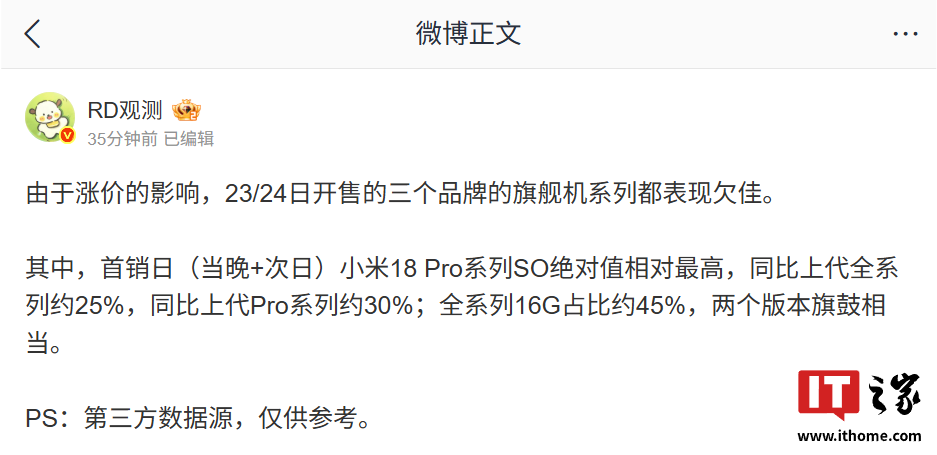
According to industry reports, three flagship smartphone series launched on September 23 and 24 saw poor initial sales performance. Analysts attribute this trend primarily to rising prices across the sector. Among the affected devices, the Xiaomi 18 Pro series recorded the highest absolute sales volume, though figures dropped by approximately 25 percent compared to the previous generation's full lineup.
Market data indicates that manufacturers have already reduced production targets by 30 to 50 percent due to significant cost increases. The surge in memory prices is driven by a combination of factors, including high demand for AI computing power, production controls by major suppliers, low industry inventory levels, and the transition between DDR4 and DDR5 memory standards.
Qualcomm has also confirmed a double-digit percentage price increase for its chips starting in September, which is expected to impact smartphones and wearable devices. Xiaomi Group President Lu Weibing noted in August that while the rate of memory price growth may slow down in the second half of the year, storage costs are projected to remain at elevated levels for the foreseeable future.



